






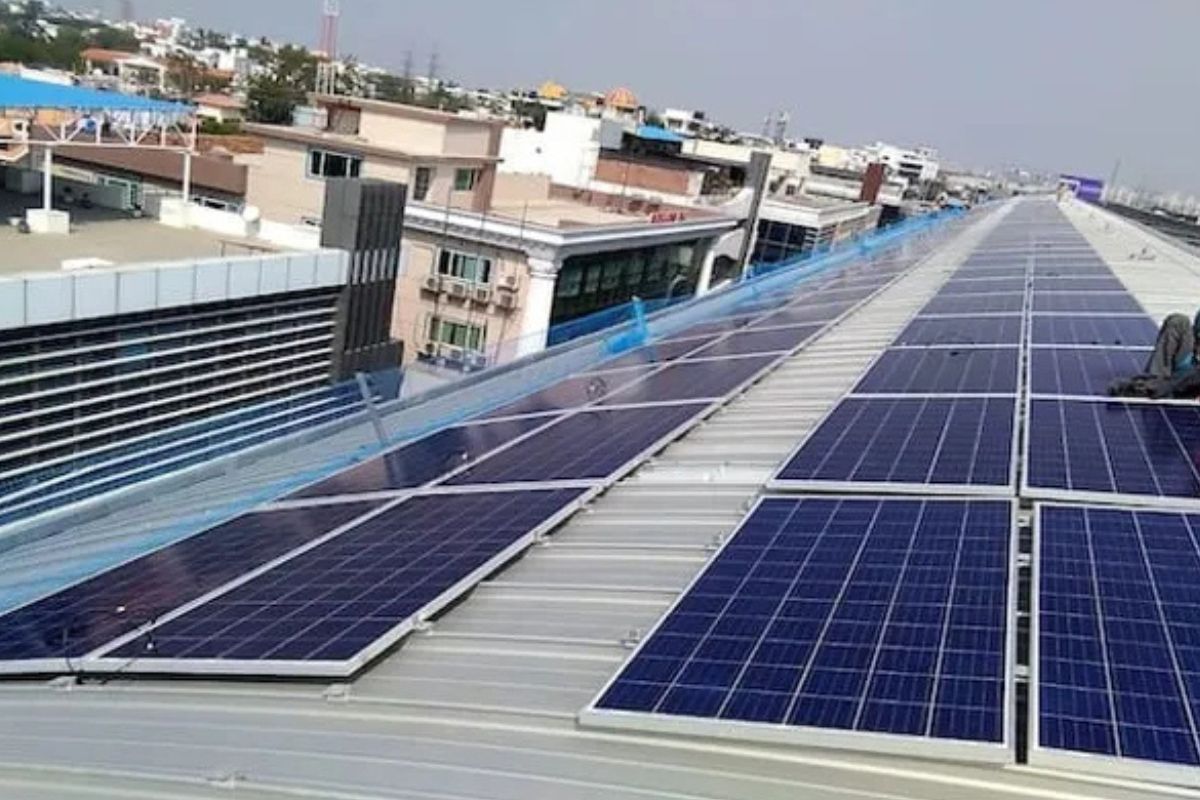
Ramping coal-fired power plants down during daytime solar peaks burns more coal per unit generated when they ramp back up for the evening. The process forces boilers to run below design efficiency, raising heat consumption per kilowatt-hour by 8 to 12 per cent.
How Does Daytime Solar Curtailment Affect Nearby Coal Power Plants?
When solar generation spikes at midday and grid operators enact solar curtailment, which is the deliberate reduction of generator output below potential capacity to prevent grid overload, adjacent coal-fired power plants must throttle back their generation. Operating below their baseline design load degrades boiler heat-rate efficiency. When these thermal plants ramp back up to meet evening demand, they burn more fuel to generate every unit of electricity than they do during steady-state operation.
Operational tracking from the Central Electricity Authority Daily Generation Reports shows that throttling a typical 500-megawatt (MW) subcritical coal unit in high-solar regions like Rajasthan and Gujarat to near its minimum technical limit increases specific fuel consumption. Thermal plants are engineered to operate continuously at high, stable capacities. Interrupting that baseline pattern forces auxiliary machinery to run longer relative to the usable output produced.
Why Does Throttling Coal Plants Lower Their Boiler Efficiency?
Throttling coal plants lowers boiler efficiency because running steam turbines below their optimal design threshold causes incomplete fuel combustion and elevates fixed auxiliary energy losses. ‘Minimum Technical Limit’ (MTL) refers to the lowest operational capacity threshold, typically 55 per cent of rated capacity for standard units, at which a thermal plant can safely run without tripping.
Standard gross heat rate design curves published in the CEA Roadmap for Flexibilisation of Coal-Fired Power Plants show that running a 500 MW subcritical coal unit at its 55 per cent minimum limit increases its specific coal consumption, the weight of fuel burnt to produce one kilowatt-hour (kWh) of electricity, by 8 to 12 per cent, rising from 0.62 kilograms per kWh to 0.69 kilograms per kWh.
The physical mechanics behind this drop-off stem from thermodynamics. Operating at low loads lowers furnace temperatures, causing incomplete fuel combustion and dropping steam temperatures entering the turbine. Additionally, plant auxiliary equipment, including cooling towers, boiler feed pumps, and draft fans, continues consuming a fixed base amount of power regardless of whether the unit outputs 300 MW or 500 MW. This fixed auxiliary load inflates net heat consumption per unit of electricity delivered to the grid.
What Triggered the Mass Solar Curtailment Spike of Q1 FY27?
The mass solar curtailment spike of Q1 FY27 was triggered by a severe structural mismatch between rapid solar capacity additions and delayed transmission infrastructure development. India curtailed 8,133 gigawatt-hours (GWh) of solar power between April and June 2026, according to official submissions to Parliament by the Ministry of New and Renewable Energy (MNRE).
That volume of unused energy equals about 1.5 days of national electricity consumption. Grid system analysis published by Ember Energy indicates that local transmission bottlenecks and grid frequency limits forced operators to issue turn-down orders to both solar parks and thermal units via Tertiary Reserves Ancillary Services (TRAS), an emergency balancing mechanism used by dispatchers to maintain frequency stability.
While solar capacity expands rapidly, grid infrastructure lacks the storage buffers required to absorb midday generation surges. Coal plants are left to absorb the volatility.
How Does Cyclic Operation Damage Thermal Power Machinery?
Cyclic operation damages thermal power machinery by subjecting thick-walled steel components to repeated thermal expansion and contraction, accelerating fatigue and metal failure.
Regulatory filings before the Central Electricity Regulatory Commission (CERC) and grid operational proceedings from the Southern Regional Power Committee (SRPC) confirm that cyclic operation subjects thick-walled components, such as steam drums, main steam pipes, and turbine rotors, to intense thermal stress. Over time, these rapid temperature fluctuations cause metal fatigue, micro-cracking, and boiler tube leaks. State-owned generation utilities face accelerating failure rates in cycling units, resulting in higher maintenance expenditures and unplanned forced outages.
Equipment suppliers design thermal units for steady-state operation over a 25-to-30-year lifespan. According to power plant maintenance records, subjecting units to continuous cyclic loading cuts component life expectancies, creating an uncounted maintenance liability for state distribution companies (DISCOMs).
Does Cycling Coal Units Create a Net Carbon Emissions Penalty?
Yes, cycling coal units creates a net carbon emissions penalty because the additional coal burned during off-design evening operation offsets a portion of the clean energy gained during daytime solar hours.
Evaluating the net environmental balance requires accounting for this heat-rate penalty. When a 500 MW unit ramps up from its 55 percent minimum limit to 100 percent capacity during the evening solar drop-off, the extra coal burned due to furnace cooling and heat-rate degradation offsets a portion of the daytime emissions savings.
Applying CEA heat-rate degradation factors to regional evening ramp dispatch schedules indicates that heat-rate penalties systematically reduce the net carbon abatement calculated from daytime solar generation.
What Solutions Exist to Mitigate Thermal Efficiency Loss?
Solutions to mitigate thermal efficiency loss include deploying grid-scale energy storage buffers, implementing ramp-rate compensation tariffs, and lowering technical minimum limits safely.
The Central Electricity Regulatory Commission (CERC) has introduced framework proposals for flexible operation compensation and ancillary service markets. These regulatory measures aim to compensate thermal generators for cycling wear while incentivising grid-scale energy storage deployment.
Operationalizing Battery Energy Storage Systems (BESS) and Pumped Storage Projects (PSP) provides rapid-response capacity to absorb daytime solar spikes and discharge during evening peaks. Utilizing utility-scale storage buffers keeps coal units operating within their optimal heat-rate bands, eliminating the thermal efficiency loss associated with cycling.
Until sufficient storage capacity comes online, system operators must balance daytime solar absorption against the physical and thermodynamic limits of the thermal fleet.
Frequently Asked Questions
What is solar curtailment and why does it happen?
Solar curtailment is the deliberate reduction of output from solar power plants below their potential capacity by grid operators. It occurs when midday solar generation exceeds local transmission capacity or grid absorption limits, threatening system frequency stability.
How does cycling a coal plant increase its specific coal consumption?
Cycling forces a coal plant to operate at low load levels where boiler combustion is less efficient and furnace temperatures drop. Because auxiliary equipment continues consuming a fixed amount of power regardless of generation output, the plant burns 8 to 12 percent more coal per kilowatt-hour produced.
What is the Minimum Technical Limit (MTL) for coal plants in India?
The Minimum Technical Limit is the lowest operational capacity, typically 55 percent of rated capacity for standard subcritical units, at which a coal plant can safely operate without instability. Regulations from the Central Electricity Authority aim to phase this limit down to 40 percent for modernized units to support renewable integration.
Does daytime solar power generation fully offset evening coal emissions?
No, daytime solar power does not fully offset evening coal emissions because throttling coal units degrades their thermodynamic efficiency. When these units ramp back up for evening peak hours, they burn additional coal per unit of electricity, partially eroding the daytime carbon savings.