






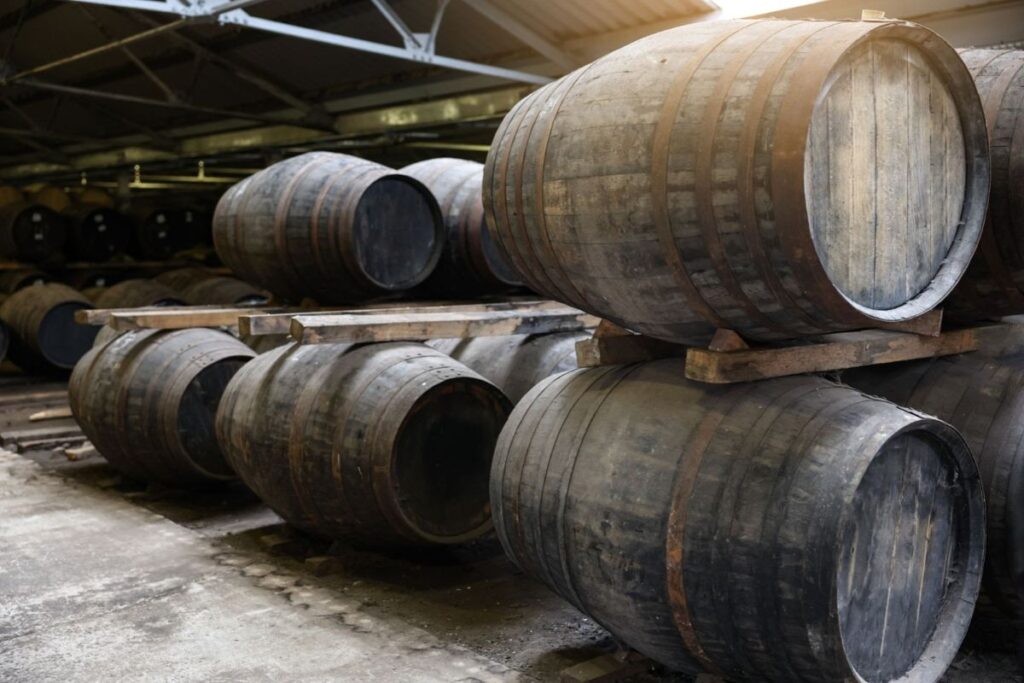
India created customs code HS 2106 90 51 on May 1, 2026, by splitting an existing tariff line and moving a 150% duty from a government notification into the main tax statute. Because that code did not exist when the India-UK trade deal was signed in July 2025, bulk Scotch reclassified under it misses the deal’s 75% tariff cut.
What Did the Finance Act, 2026 Actually Change on May 1?
The Finance Ministry did not invent a new tax in May 2026; it converted an existing notification-based 150% duty into a standalone eight-digit statutory tariff line, HS 2106 90 51.
Under Clause 136(c) and the Fourth Schedule of the Finance Bill, 2026, which took effect on May 1, 2026, Parliament amended the First Schedule of the Customs Tariff Act, 1975, India’s primary statute setting import duty rates. The amendment split sub-heading 2106 90 50 (“compound alcoholic preparations of a kind used for the manufacture of beverages”) into two distinct tariff items:
- 2106 90 51, covering preparations with an alcoholic strength exceeding 0.5% by volume, carrying a statutory Basic Customs Duty (BCD) of 150%.
- 2106 90 59, covering all other preparations under that sub-heading, set at a statutory BCD of 50%.
According to the Union Budget 2026–27 Tax Research Unit (TRU) Explanatory Memorandum and Central Board of Indirect Taxes and Customs (CBIC) tariff alignment notifications effective May 1, 2026, this 150% rate was already applied to those preparations through an executive exemption schedule before May 1.
Budget 2026 folded that notification rate into the statutory First Schedule and updated the aligned tariff entries in the import policy schedule. Moving a duty from a notification into the main tariff schedule changes its legal status: it turns a conditional rate into a permanent eight-digit customs classification.
Why Couldn’t the India-UK CETA Schedule Cover HS 2106 90 51?
India and the United Kingdom signed their trade deal ten months before HS 2106 90 51 existed, leaving the new code completely outside the agreement’s reduced tariff list.
On July 24, 2025, both countries signed the India-UK Comprehensive Economic and Trade Agreement (CETA), a bilateral free trade pact governing goods and services tariffs. Under standard treaty practice, India’s tariff concessions in Annex 2A of CETA were mapped to the Customs Tariff Schedule in force on the date of signing.
When New Delhi implemented CETA’s July 15, 2026 tariff cuts, the treaty schedule lowered the Basic Customs Duty on Scotch whisky under Chapter 22, specifically HS 2208 30 92 (Scotch whisky in containers exceeding two litres), from 150% to 75%, according to trade policy analyses of India’s CETA tariff schedule. Together with India’s 5% levy on customs duty, that cut brought the effective tariff on scheduled bulk Scotch down from 162.5% to 78.75%.
Code HS 2106 90 51 appears nowhere in that July 2025 CETA schedule. Under Indian customs law, any import classified under an eight-digit code omitted from a bilateral trade agreement defaults to India’s Most Favoured Nation (MFN) tariff, which for HS 2106 90 51 sits at 150% BCD, or 162.5% effective duty.
How Many Bulk Scotch Containers Are Held Up at Indian Ports?
Indian customs authorities have detained roughly 80 to 90 containers of bulk Scotch whisky worth an estimated £50 million after reclassifying the shipments from HS 2208 30 92 to HS 2106 90 51.
According to Global Trade Research Initiative (GTRI) filings and industry reporting on the port delays in November 2026, the held consignments belong to global distillers, including Pernod Ricard, Diageo, and Bacardi, as well as Indian blenders such as Radico Khaitan, Allied Blenders and Distillers, and Tilaknagar Industries.
The shipments contain cask-strength Scotch at 58% to 63% alcohol by volume (ABV), imported in bulk tanks for dilution and bottling in India. Following a November 4 directive from the Directorate of Revenue Intelligence (DRI), India’s apex anti-smuggling and customs enforcement agency, covered in reports on the customs enforcement memo, investigators moved to classify those consignments under HS 2106 90 51 instead of HS 2208 30 92, raising the effective tax bill by 83.75 percentage points, from 78.75% to 162.5%.
In a November 6 stock exchange disclosure analyzed in Tilaknagar Industries’ regulatory filings on the DRI seizure, the company reported that DRI officers had seized imported bulk Scotch worth ₹30.14 crore following October searches at its office and factory.
Who Benefits Inside India’s Liquor Industry If Bulk Scotch Stays at 162.5%?
Keeping bulk Scotch at a 162.5% tariff hurts Indian blenders that bottle mid-tier Scotch locally while shielding domestic grain-neutral-spirit producers and Indian single-malt distillers from lower-cost Scottish blending stock.
According to Scotch Whisky Association export data, bulk Scotch accounts for roughly 80% of all UK Scotch exports to India by volume within a bilateral Scotch trade valued at £286 million ($386.1 million) in 2025. Indian-Made Foreign Liquor (IMFL) companies, represented by the Confederation of Indian Alcoholic Beverage Companies (CIABC), rely on those bulk imports to blend with domestic neutral spirit and bottle mid-tier Scotch brands inside India.
As outlined in tariff structure breakdowns of the standoff, taxing bulk Scotch at 162.5% under HS 2106 90 51 while Bottled-in-Origin Scotch enters at 78.75% under Chapter 22 strips domestic bottling plants of their tariff advantage. Conversely, for domestic producers of grain-neutral spirit (GNS), the purified agricultural alcohol used as the base for Indian spirits, represented by bodies such as the All India Distillers’ Association (AIDA), and Indian single-malt makers, a 162.5% barrier on bulk imports preserves local grain demand and domestic malt pricing.
Does Customs’ Legal Case Hold Up Under Global Tariff Rules?
While the Finance Ministry folded dozens of legacy notifications into the tariff book during Budget 2026, classifying pure cask-strength Scotch under Chapter 21 conflicts with both UK statutory definitions and World Customs Organization classification rules.
Across Budget 2026–27, the Finance Ministry folded dozens of legacy customs exemption notifications into the First Schedule to simplify the tariff book, meaning HS 2106 90 51 followed a template applied across 54 tariff headings, according to tax law reviews of Budget 2026 tariffisation. On the technical classification, customs investigators argue that 60% ABV bulk spirit cannot be sold directly to consumers and requires industrial dilution and blending in India, fitting the description of a preparation used to manufacture beverages.
Trade analysts and liquor exporters cite two legal texts that directly counter that interpretation:
- UK Scotch Whisky Regulations 2009: Under UK law, spirit distilled and matured in Scotland can contain only water, cereals, yeast, and plain caramel coloring, meaning cask-strength bulk spirit is legally Scotch whisky, not a compounded preparation.
- World Customs Organization (WCO) Harmonized System classifications and trade policy reviews of Heading 22.08: WCO rules place undenatured spirits under 80% ABV in Heading 22.08 regardless of container size or post-import dilution, restricting Heading 21.06 to preparations containing added flavorings or compound essences.
The immediate resolution turns on an executive fix rather than a court ruling. Commerce Secretary Rajesh Agrawal has stated in briefings on the inter-ministerial talks that India remains committed to its CETA obligations while the Finance and Commerce ministries work out a solution. Under Section 25 of the Customs Act, 1962, the Finance Ministry can issue a technical transposition notification adding HS 2106 90 51 to the CETA concessional schedule, or CBIC can instruct port commissioners to clear unflavored bulk Scotch under HS 2208 30 92. Until North Block acts, importers must either pay 75% upfront while posting bank guarantees for the remaining 83.75-percentage-point duty gap, or leave tanks sitting at port.
Frequently Asked Questions
Why is bulk Scotch being charged 162.5% duty instead of 78.75% under the India-UK trade deal?
Customs investigators are classifying cask-strength bulk Scotch (58% to 63% ABV) under tariff code HS 2106 90 51 rather than HS 2208 30 92. Because HS 2106 90 51 was created on May 1, 2026, ten months after the India-UK CETA was signed, it is absent from the bilateral tariff concession list and defaults to India’s 150% Most Favoured Nation duty (162.5% effective tax with the 5% levy).
When did India create customs code HS 2106 90 51, and where did the 150% rate come from?
India introduced HS 2106 90 51 on May 1, 2026, through Clause 136(c) and the Fourth Schedule of the Finance Bill, 2026. The amendment split sub-heading 2106 90 50 and moved an existing 150% duty rate from an executive exemption notification directly into the First Schedule of the Customs Tariff Act, 1975.
How does the HS 2106 90 51 classification affect Indian liquor companies?
Taxing bulk Scotch at 162.5% while bottled Scotch enters at 78.75% eliminates the tariff advantage for Indian-Made Foreign Liquor blenders that dilute and bottle imported Scotch locally. At the same time, keeping bulk imported spirit expensive protects domestic grain-neutral-spirit producers and Indian single-malt distillers from lower-cost Scottish blending inputs.
How can the Indian government resolve the HS 2106 90 51 bulk Scotch dispute?
Under Section 25 of the Customs Act, 1962, the Finance Ministry can issue a technical transposition notification adding HS 2106 90 51 to the India-UK CETA concessional schedule. Alternatively, the Central Board of Indirect Taxes and Customs (CBIC) can direct port authorities to classify unflavored cask-strength Scotch under HS 2208 30 92.