






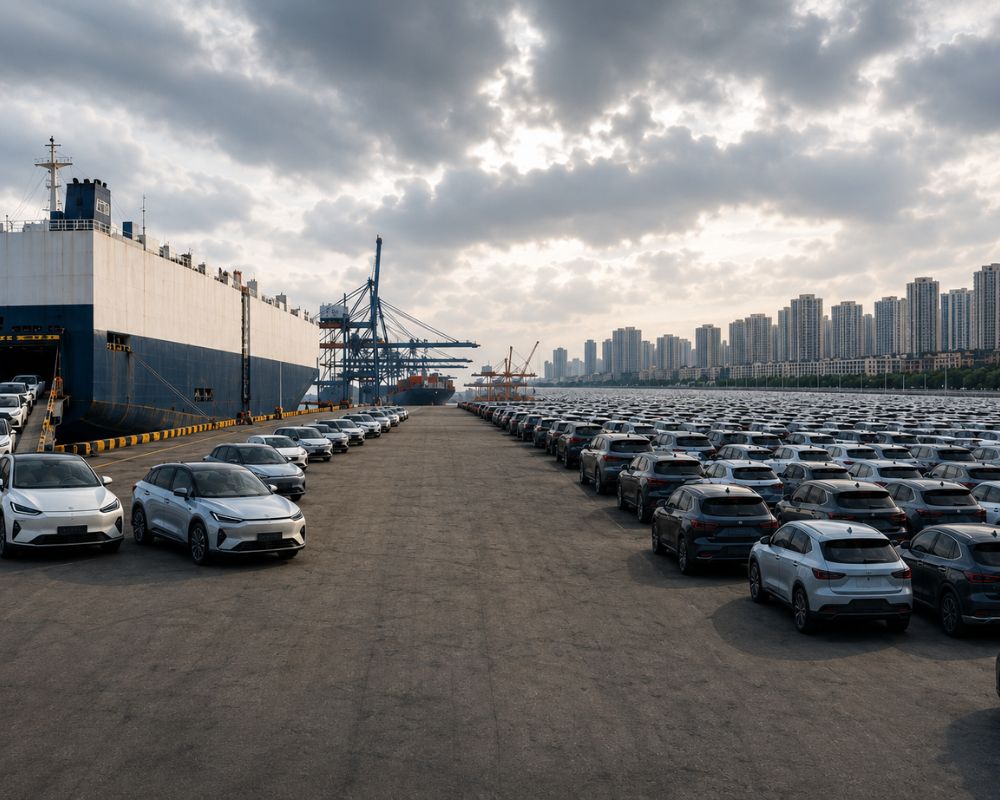
Executive Summary: The narrative of an unstoppable global expansion by Chinese electric vehicle (EV) manufacturers conceals a profound operational divergence between outbound customs shipments and overseas retail sales. While the China Passenger Car Association (CPCA) celebrated record export volumes, automotive registration data from major destination markets reveals an expanding backlog of unsold inventory. In major European maritime gateways such as Antwerp-Bruges and Bremerhaven, tens of thousands of Chinese battery electric vehicles (BEVs) from brands like BYD, SAIC (MG), and Chery remain parked on port terminals for upwards of 120 to 180 days. This inventory buildup reflects strategic front-loading ahead of European Commission countervailing duties rather than genuine consumer absorption.
Customs Departures vs. Motor Vehicle Registrations
In global trade economics, a critical distinction separates wholesale exports from end-market registrations. When an EV departs Shanghai or Shenzhen aboard a Roll-on/Roll-off (RoRo) carrier, Chinese customs logs it as a completed commercial export transaction. However, the car is not commercially absorbed until it clears import customs, enters a regional dealer franchise network, and is formally registered by a consumer or fleet buyer.
Discrepancies compiled by the European Automobile Manufacturers’ Association (ACEA) and trade bodies reveal that in key markets like Germany, France, and Belgium, actual registrations of imported Chinese BEVs have lagged factory customs declarations by 35% to 50%. Rather than flowing into showroom distribution, exported vehicles are accumulating at logistics hubs, creating acute parking lot congestion across North Sea container and vehicle terminals.
This dynamic mirrors international tariff front-loading strategies analyzed in our coverage of EU retaliatory tariffs and trade policy pauses and the broader geopolitical implications of unilateral import duties and trade friction.
The Port Bottleneck: Antwerp-Bruges and Bremerhaven
Terminal operators across Europe have repeatedly issued warnings regarding terminal dwell times. Automotive imports traditionally spend 15 to 25 days moving from port berths to inland carrier trucks. For Chinese EV shipments, dwell times have lengthened to four to six months due to three structural factors:
- Absence of Established Dealer Networks: Unlike legacy Japanese, Korean, or European automakers with thousands of independent franchised dealerships across Europe, newer Chinese entrants rely on direct-to-consumer (D2C) online models or newly signed regional distributor groups that lack physical showroom floor capacity.
- Truck and Inland Transporter Shortages: European road haulers prioritize long-term contractual commitments with domestic manufacturers, leaving Chinese import aggregators unable to secure specialized car-carrier trucks for inland transit.
- Software Localization and Regulatory Pre-Delivery Inspections (PDI): Thousands of vehicles arrive requiring regional firmware updates, language pack flashes, and European standard charging protocol testing prior to dealer delivery.
Regional Comparison: Export Volumes vs. Actual Registrations
A comparative overview demonstrates the geographical spread of the inventory gap:
| Destination Market | Outbound Export Volume (CPCA) | Verified Registrations (Local Registries) | Estimated Terminal Backlog | Primary Operational Bottleneck |
|---|---|---|---|---|
| European Union (Core) | ~640,000 Units | ~395,000 Units | 245,000 Units | Port congestion, European Commission anti-subsidy duties |
| Southeast Asia (ASEAN) | ~410,000 Units | ~315,000 Units | 95,000 Units | Right-hand-drive distribution bottlenecks, charging infrastructure |
| Latin America (Brazil/Mexico) | ~380,000 Units | ~290,000 Units | 90,000 Units | Reimposition of federal EV import tariffs in Brazil |
| Middle East & GCC | ~190,000 Units | ~155,000 Units | 35,000 Units | Extreme summer battery management testing and service networks |
The European Commission Anti-Subsidy Tariff Catalyst
The primary catalyst behind this inventory surge is the European Commission Directorate-General for Trade countervailing duty investigation into Chinese state subsidies. Under EU trade provisions, provisional duties ranging from 17% on BYD to over 35% on SAIC were implemented on top of the baseline 10% EU auto tariff.
Anticipating these punitive duty rates, Chinese automakers booked every available RoRo vessel in late 2024 and 2025 to land inventory onto European soil before the statutory tariff implementation date. While this maneuver secured a lower tariff basis, it transferred severe working-capital carrying costs onto the balance sheets of manufacturers and European importer subsidiaries.
Similar to automotive protectionism strategies observed in India—as detailed in our analysis of domestic tax lobbying behind small car market dominance—tariffs force foreign manufacturers to choose between localized assembly joint ventures or enduring structural margin erosion.
Frequently Asked Questions
Why are Chinese EV exports higher than actual consumer sales?
Chinese customs statistics track vehicles as soon as they leave domestic ports. However, due to lack of European dealership capacity, truck shortages, and tariff front-loading, hundreds of thousands of exported cars remain stranded in European port storage yards awaiting buyers or transport.
What are the EU tariffs on Chinese electric cars?
In addition to the standard 10% automotive import tariff, the European Commission imposed countervailing duties ranging from 17.0% for BYD, 18.8% for Geely, and up to 35.3% for SAIC, based on calculated state subsidy margins.
Which ports have the highest concentration of unsold Chinese EVs?
The Port of Antwerp-Bruges in Belgium and Bremerhaven in Germany host the largest accumulations of parked Chinese electric vehicles, with terminal dwell times averaging between 4 to 6 months.