






Entities linked to Subhash Chandra’s family controlled the vote on his personal insolvency because their corporate structures technically sidestepped the Insolvency and Bankruptcy Code’s exact definition of an “associate”. By maintaining shareholding arrangements just below statutory thresholds, these companies legally commanded a 61.78% voting bloc, outvoting institutional banks.
How Did Subhash Chandra’s 0.03% Repayment Plan Pass at NCLT?
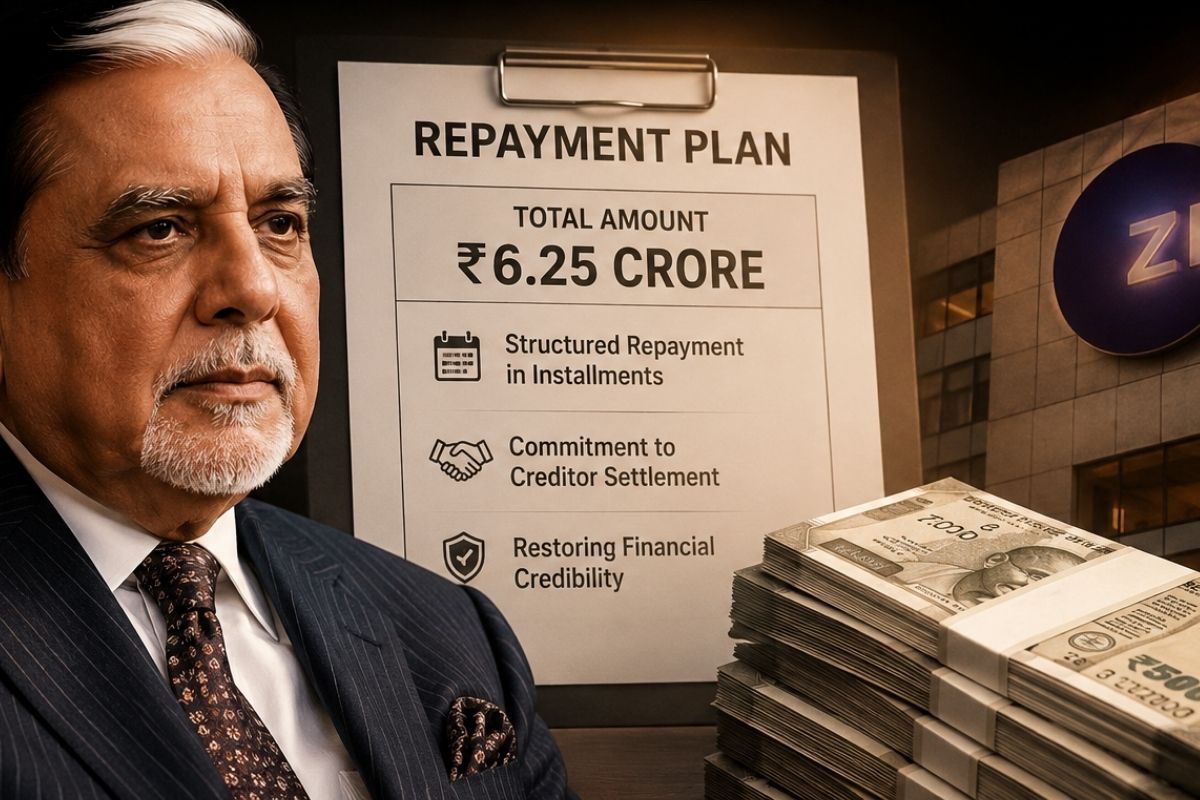
The resolution of Subhash Chandra’s ₹22,006.57 crore personal guarantor insolvency hinged on a single legal definition. Major institutional lenders, including Housing Development Finance Corporation (HDFC) and Union Bank of India, voted to reject a Subhash Chandra repayment plan that offered them ₹6.25 crore, a recovery of 0.03% on the total admitted claims, according to National Company Law Tribunal (NCLT) records.
They lost the vote. The plan passed with an 80.81% majority by value. That majority was not built by financial institutions. It was constructed by a bloc of five corporate entities, including World Crest Advisors LLP, Veena Investments Private Limited, Lemonade Capital Advisors LLP, and Corpcall Capital Advisors LLP.
Together, these entities commanded a 61.79% voting share in the Committee of Creditors (CoC), the decision-making body of financial creditors that votes to accept or reject a debtor’s repayment plan. Representatives for the entities and the Resolution Professional maintain the debt is valid. The NCLT initially ruled in their favour, though a five-member special bench stayed the order on September 1 pending further review.
Who Are the Creditors Behind Subhash Chandra’s 61.78% Voting Bloc?
To control an insolvency vote, a voting bloc must avoid being classified as an “associate” or related party under Section 79 of the Insolvency and Bankruptcy Code (IBC). This is a legal classification that disqualifies entities with direct ownership, family ties, or governance control from voting in insolvency proceedings to prevent conflicts of interest.
According to Ministry of Corporate Affairs filings submitted to the tribunal, the creditor entities engineered an ownership structure that sat strictly outside the 51% threshold required to trigger the IBC’s associate classification. Veena Investments is controlled by Sushila Devi Goel, the wife of Jawahar Goel, who is Subhash Chandra’s brother. World Crest and Direct Media Distribution Ventures Private Limited are subsidiaries of Veena Investments.
Furthermore, partners in Lemonade and CorpCall serve as directors in companies disclosed as related parties in Veena Investments’ financial statements. Because Chandra himself holds no direct ownership or legal control over the boards of these companies, they bypassed the statutory threshold. This structure distanced the entities just far enough from Chandra to pass the NCLT’s legal test, separating beneficial control from the statutory definition of association.
When Were the Personal Guarantees Invoked Against Subhash Chandra?
Commanding a 61.78% NCLT creditors’ vote requires holding a massive volume of admitted debt. These entities did not lend cash directly to Chandra. They held personal guarantees, which are legal promises made by an individual to pay off corporate debt if the borrowing company defaults.
The timing of these claims determined the voting power. According to tribunal records, the guarantees relied upon by these family-linked entities were invoked only after the interim moratorium had already come into effect. The interim moratorium is a statutory freeze triggered upon filing for Subhash Chandra’s personal insolvency that halts all legal claims and asset transfers against the debtor.
The sudden admission of these invoked claims into the resolution process dwarfed the financial exposure held by public banks. This arithmetic guaranteed the outcome of the vote before the institutional banks cast their ballots.
Why Did NCLT Judges Disagree Over the IBC Section 79 Associate Definition?
The lenders challenged this outcome, leading to a split NCLT verdict that exposed a rift in how the tribunal interprets the law. The legal debate centred entirely on the IBC Section 79 associate definition.
The approving members ruled based on a strict reading of the statute. According to the NCLT majority opinion, the statutory test is based on ownership and legal control, not merely on commercial influence or business proximity.
The dissenting technical member, however, argued that applying a literal reading ignored the practical reality of the corporate structures. The dissenting opinion stated the claims from the five entities were so fundamentally defective that their admission alone vitiated the entire process.
What Does the Subhash Chandra Ruling Mean for Banking Collateral?
The initial approval of this repayment plan establishes a specific, legally tested mechanic for personal guarantor insolvencies. Promoters facing personal insolvency proceedings under Sections 94 and 95 of the IBC now have a case study in corporate structuring.
Bank risk committees will have to re-evaluate the risk weighting of personal guarantees for all future corporate loans. A mechanism exists to reduce a multi-thousand-crore guarantee to a fraction of a percent through statutory compliance.
Interconnected Business and Economic Realities
To understand systemic recovery rates, insolvency jurisprudence, and capital structure stress across Indian corporate debtors, explore our companion investigations:
- NCLT Tie-Breaker Rulings Enforce Near-Total Debt Haircuts, documenting systemic recovery haircuts, Section 12A settlement dynamics, and dissenting creditor litigation under the IBC.
- Daiichi Sankyo Ranbaxy Arbitration Award: The Real Losses, analyzing promoter personal guarantees, asset tracing difficulties, and judicial execution delays in high-stakes recovery disputes.
- India Capex Surge: How Much Funds New Capacity vs. Cost-Overrun Refinancing?, investigating corporate borrowing cycles, bank balance sheet exposure, and debt refinancing trends across heavy industry.
- Tata Sons Profit & TCS Dividend: How One Unit Funds Pay and Capital Bets, examining cash flow concentration, group holding liabilities, and capital insulation strategies.
Frequently Asked Questions
How much is Subhash Chandra offering to repay his creditors?
Under the currently proposed Subhash Chandra repayment plan, he offered ₹6.25 crore against total admitted claims of approximately ₹22,006.57 crore, representing a recovery rate of 0.03%. This amount was intended to settle his liabilities as a personal guarantor for Essel Group loans.
Why did banks lose the NCLT vote on Subhash Chandra’s insolvency?
Institutional lenders like HDFC and Union Bank of India held a minority voting share of just 19.18%. They were outvoted by a bloc of five corporate entities linked to Chandra’s sister-in-law, which collectively held a 61.78% majority.
Is the ₹6.25 crore repayment plan final?
No. While a third member of the NCLT initially approved the plan on August 25, a newly formed five-member special bench stayed the order on September 1, 2026, barring Chandra from selling any properties while they review the objections from dissenting lenders.