






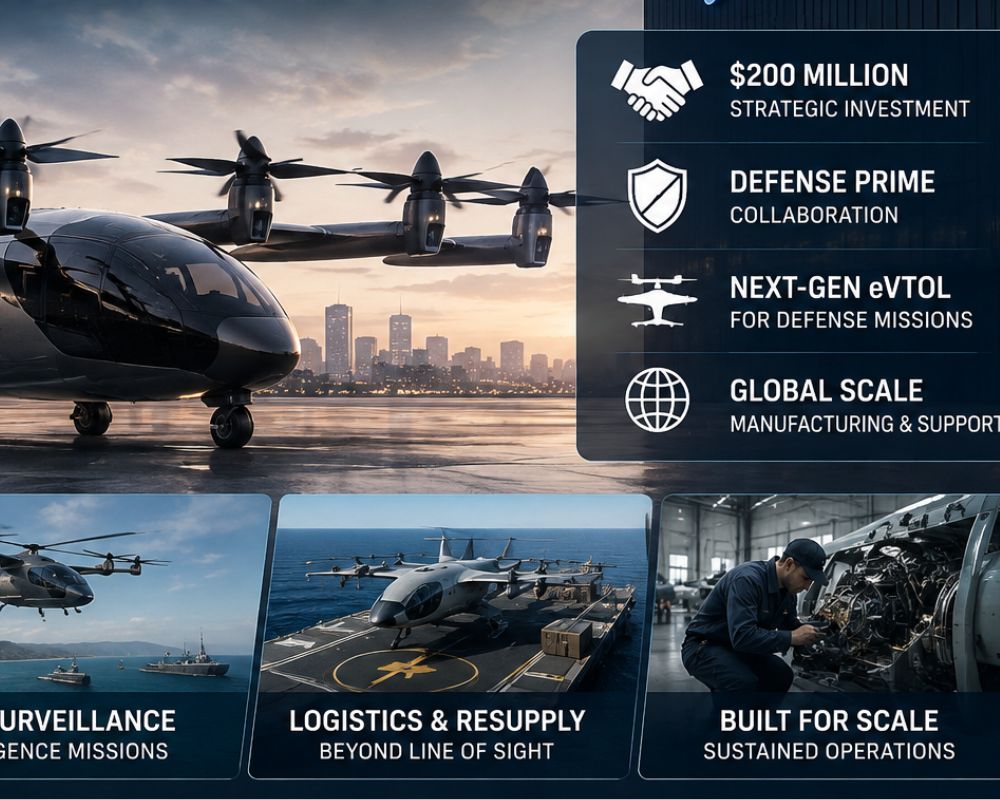
Executive Summary: Archer Aviation’s acquisition of Boeing’s unmanned systems portfolio fundamentally transforms the venture-backed electric vertical takeoff and landing (eVTOL) developer into an active Tier-2 defense prime contractor. While public relations announcements framed the transaction around physical artificial intelligence and autonomous commercial air taxis, the operational core of the asset transfer is Insitu—a Boeing defense subsidiary generating over $200 million in annual military drone contracts. To retain this revenue base, Archer must navigate rigorous foreign ownership and entity vetting overseen by the Defense Counterintelligence and Security Agency (DCSA) and convince the U.S. Navy and allied militaries that a commercial mobility startup can sustain decades-long tactical aerospace maintenance pipelines.
From Pre-Revenue eVTOL Developer to Active Defense Prime
According to formal transaction disclosures filed with the Boeing Company Investor Relations and regulatory disclosures accessible via SEC EDGAR, Archer acquired three distinct operational assets: autonomous air-taxi unit Wisk Aero, airspace management software firm SkyGrid, and military drone manufacturer Insitu. Boeing simultaneously injected fresh capital and committed to manufacturing collaborations.
This restructuring shifts Archer’s balance sheet reality. While Archer’s flagship Midnight eVTOL and Wisk’s Generation 6 aircraft remain capital-intensive, pre-revenue flight-test programs, Insitu provides an active, highly capitalized manufacturing engine. Insitu holds substantial federal prime contracts, including a landmark award to manufacture and support ScanEagle and RQ-21A Blackjack tactical unmanned aerial systems (UAS) for the U.S. Navy, U.S. Marine Corps, and international security partners.
Managing high-volume aerospace supply lines and multi-year production commitments introduces structural cash-flow and capital constraints, paralleling the heavy balance sheet obligations analyzed in our study of fleet commitments and capital expenditure before profitability.
Asset Portfolio Breakdown: Boeing Divestments to Archer
The table below breaks down the operational characteristics, commercial status, and regulatory oversight regimes of the three business entities transferred in the transaction:
| Acquired Subsidiary | Core Operational Focus | Revenue Status | Primary Customer Base | Key Regulatory Hurdle |
|---|---|---|---|---|
| Insitu | Tactical UAS (ScanEagle, Integrator, RQ-21A) | $200M+ Annual Active Revenue | U.S. Navy, USMC, 35+ Foreign Militaries | DCSA FOCI mitigation & ITAR compliance |
| Wisk Aero | Autonomous 6th-Gen eVTOL passenger aircraft | Pre-revenue (R&D phase) | Commercial urban air mobility operators | FAA Part 21 & Part 135 autonomous type certification |
| SkyGrid | Third-party airspace management (UTM) software | Early commercial software licensing | Civil aviation authorities & fleet networks | FAA airspace integration & cybersecurity validation |
Regulatory Hurdles: DCSA Vetting and Foreign Ownership (FOCI) Controls
Owning an established defense contractor requires corporate compliance infrastructure that commercial startups rarely possess. Because Insitu handles classified military hardware and defense telemetry, the change of corporate ownership triggers mandatory facility clearance audits under the Defense Counterintelligence and Security Agency Foreign Ownership, Control, or Influence (FOCI) guidelines.
Under FOCI regulations, DCSA investigates whether any foreign individuals or foreign investment entities possess the power to direct corporate policy or access export-controlled defense technology under the International Traffic in Arms Regulations (ITAR). Venture-backed commercial aviation companies frequently raise capital from sovereign wealth funds and multinational syndicates. If foreign equity exposure exceeds statutory thresholds, DCSA mandates strict mitigation mechanisms—such as a formal Proxy Agreement or Voting Trust Agreement.
Under a Proxy Agreement, operational authority over Insitu would be stripped from Archer’s executive suite and vested in an independent board of cleared U.S. citizens approved by the Department of Defense. While Archer maintains existing research agreements with the U.S. Air Force via AFWERX, scaling from exploratory development contracts to full-scale classified defense manufacturing requires an entirely different tier of institutional security governance.
Cultural Integration: Silicon Valley Speed vs. Defense Rigidity
Merging commercial software engineering with military hardware production creates profound organizational friction. Commercial startups prioritize rapid iterative prototyping and flexible software deployment. Conversely, defense aerospace manufacturing operates within strict military specifications (Mil-Specs) and Federal Acquisition Regulation (FAR) clauses where unauthorized alterations to bill-of-materials components can constitute federal procurement fraud.
These divergent operating cultures frequently compel acquirers to isolate military subsidiaries into ring-fenced operational silos rather than merging engineering teams. Similar proprietary lock-in mechanisms and restrictive component servicing structures are examined in our investigation into robotics servicing lockouts and equipment repair restrictions. How Archer manages this corporate boundary will determine whether Insitu’s cash flow can effectively support broader research initiatives or get drained by bureaucratic friction, a challenge closely linked to corporate supply chain integration strategies analyzed in our report on anchor investments and conglomerate supply chain alignments.
Contract Renewal Risks in Foreign Military Sales (FMS)
Insitu’s tactical drones operate across more than 35 international allied nations, predominantly procured through the government-to-government Foreign Military Sales (FMS) program administered by the Defense Security Cooperation Agency (DSCA). FMS procurement officers commit to multi-decade lifecycle sustainment agreements, relying heavily on parent company stability.
Under Boeing, allied defense ministries had implicit assurance of a multi-billion-dollar aerospace conglomerate backing spare parts, avionics upgrades, and telemetry maintenance. As ownership transitions to Archer, international procurement commands will assess whether a commercially oriented startup possesses the long-term balance sheet durability to sustain specialized military drones throughout extended operating lifespans.
Frequently Asked Questions
What subsidiaries did Archer Aviation acquire from Boeing?
Archer Aviation acquired three core businesses: Insitu (tactical military unmanned aerial systems), Wisk Aero (autonomous electric passenger eVTOL aircraft), and SkyGrid (airspace management and routing software), with Boeing providing strategic investment and joint manufacturing support.
How much annual revenue does Insitu generate?
Insitu generates over $200 million in annual defense revenue through production, support, and sustainment contracts for the ScanEagle, Integrator, and RQ-21A Blackjack unmanned aircraft systems across U.S. and allied armed forces.
What is DCSA FOCI vetting and why does Archer require it?
The Defense Counterintelligence and Security Agency (DCSA) enforces Foreign Ownership, Control, or Influence (FOCI) regulations to ensure that defense contractors handling classified technology cannot be influenced by foreign investors. Because Archer has international investors, DCSA conducts audits to verify that defense contracts remain insulated under cleared U.S. oversight.
How does this acquisition affect Archer’s commercial eVTOL timeline?
The acquisition provides Archer with active cash flows and high-precision composite manufacturing infrastructure from Insitu, alongside autonomous flight technology from Wisk Aero, while requiring management to establish ring-fenced governance to meet military compliance standards.