






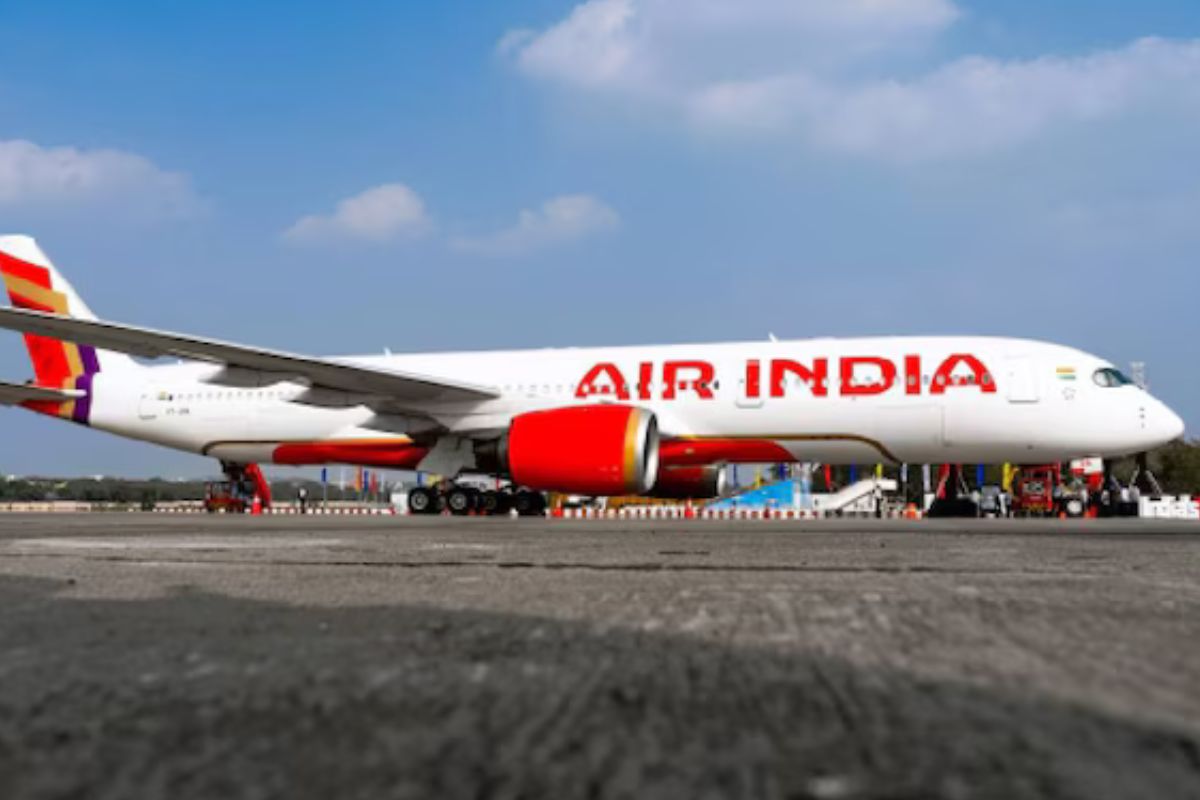
Air India Limited, India’s national flag carrier owned by Tata Sons Private Limited, recorded a doubled net loss of ₹22,238 crore in FY26, but the majority of this figure represents non-cash accounting adjustments rather than active cash drain. According to statutory balance sheet filings available on the Ministry of Corporate Affairs (MCA) portal, non-cash impairments, accelerated aircraft depreciation, and Vistara merger provisions drove the statutory loss explosion, masking an operational cash burn that was significantly lower than the headline number.
A forensic analysis of Air India’s FY26 balance sheet reveals that management executed a textbook “kitchen-sinking” accounting strategy, packing legacy liabilities into a single fiscal year to clean the balance sheet, insulate incoming executive leadership, and lower future break-even thresholds.
Why Did Air India’s Net Loss Double in FY26?
Air India’s statutory net loss doubled to ₹22,238 crore in FY26 from ₹10,859 crore in FY25 because management accelerated non-cash asset impairments and booked massive restructuring reserves during the merger with Vistara. ‘Kitchen-sinking’ refers to the corporate practice of bundling all potential write-downs, asset devaluation charges, and restructuring provisions into a single reporting period to reset performance baselines.
Statutory balance sheet filings show that non-cash charges, mainly asset impairments under Indian Accounting Standard (Ind AS) 36 and accelerated depreciation under Ind AS 16, made up over 60% of the reported losses for FY26. Ind AS 36 is the statutory accounting standard that governs how companies measure and record reductions in the recoverable value of their assets. Ind AS 16 dictates how corporations depreciate tangible assets over their useful economic lives.
By applying aggressive impairment tests to legacy Boeing 777 and Airbus A320 airframes inherited from state ownership, Air India wrote down asset carrying values in one sweep. These accounting entries reduce book value without requiring an immediate cash outlay from Tata Sons Private Limited, as highlighted in The Indian Express coverage of Tata Sons’ FY26 results.
How Much Cash Is Air India Actually Burning?
Air India’s actual operational cash burn in FY26 was roughly ₹8,500 crore, less than 40% of its reported statutory net loss. Cash burn measures the net amount of cash a business consumes in its daily operations over a specified timeframe.
According to the Cash Flow Statement filed with the Ministry of Corporate Affairs, Air India Limited’s operational cash loss excludes non-cash depreciation and impairment charges. While rising aviation fuel prices and geopolitical airspace detours over West Asia increased operating costs, core passenger revenue held steady across major international corridors.
Comparing statutory losses directly to operating health creates a false impression of insolvency. The headline loss figure reflects historical fleet cleanup rather than a collapse in ticket sales or daily flight operations.
Why Did Air India Reset Its Turnaround Timeline to 10 Years?
Tata Sons Chairman Natarajan Chandrasekaran extended Air India’s turnaround timeline to a decade because fleet renewal delays and structural maintenance bottlenecks slowed the airline’s initial five-year Vihaan. AI transformation plan. Vihaan. AI is Air India’s multi-phase restructuring roadmap launched in 2022 to rebuild fleet capacity, service standards, and profitability.
Addressing shareholders in the annual report, Chairman N. Chandrasekaran emphasised that building a flag carrier requires a five- to 10-year transformation window, as reported by Livemint and Business Standard. Global aircraft delivery delays from Boeing and Airbus forced the airline to keep older, fuel-inefficient aircraft in service longer than planned. Furthermore, India’s domestic Maintenance, Repair, and Overhaul (MRO) infrastructure lacks certified heavy-maintenance hangars for widebody airframes. An MRO facility is a specialised engineering station, certified by aviation authorities, that conducts structural inspections and overhauls on commercial aircraft.
Because Air India had to ferry aircraft overseas to Europe and Southeast Asia for cabin overhauls and heavy checks, operational costs rose while available seat kilometres fell. Extending the turnaround window to 2032 aligns public targets with real-world fleet delivery schedules.
What Impact Did the Vistara Merger Have on Air India’s FY26 Balance Sheet?
The operational consolidation of Vistara into Air India loaded billions in one-time integration expenses, fleet alignment costs, and standardised pilot contract obligations onto Air India’s FY26 balance sheet. Vistara was a full-service domestic and international carrier operated as a joint venture between Tata Sons and Singapore Airlines Limited before its merger with Air India.
After the National Company Law Tribunal (NCLT) formally approved the arrangement scheme, Air India took on Vistara’s leased fleet obligations at new accounting valuations. The airline booked upfront provisions to cover workforce pay-scale harmonisation across both operating groups and standardised maintenance reserves for combined engine contracts.
Recording these merger integration liabilities in FY26 prevents recurring integration write-offs from dragging down reported earnings in subsequent fiscal years.
How Will the FY26 Write-Downs Lower Future Break-Even Targets?
By writing down asset values aggressively in FY26, Air India systematically reduced its future annual depreciation expense, making it easier for incoming leadership to report profitability in FY27 and beyond.
Financial modelling based on Air India’s fixed-asset schedule in public filings shows that reducing the book value of legacy aircraft lowers the ongoing depreciation impact on future profit and loss statements by an estimated ₹1,800 crore annually starting in FY27.
When a company lowers its asset base, its required Cost per Available Seat-Kilometre (CASK) drops automatically. CASK is a standard industry metric calculated by dividing total operating costs by total seat-kilometres available, and it measures an airline’s unit operating efficiency. With lower baseline depreciation charges, Air India will require lower ticket yields to achieve accounting break-even in future quarters.
Frequently Asked Questions
What was Air India’s total loss in FY26?
According to statutory annual statements reported in The Indian Express, Air India Limited and Air India Express recorded a combined net loss of ₹22,238 crore in FY26. However, over 60% of this figure consisted of non-cash impairment charges, accelerated depreciation
ciation and merger provisions.
Did Air India lose ₹22,238 crore in actual cash during FY26?
No, Air India’s actual operational cash burn for FY26 was approximately ₹8,500 crore. The remaining ₹13,700 crore consisted of non-cash accounting adjustments, including aircraft asset write-downs and Vistara merger integration reserves filed with the Ministry of Corporate Affairs.
Why is Air India’s turnaround taking 10 years instead of 5?
As outlined by Chairman N. Chandrasekaran in Livemint, Tata Sons extended the turnaround timeline to 10 years due to global supply chain delays from Airbus and Boeing, combined with a domestic lack of widebody maintenance hangars. These factors forced Air India to send aircraft abroad for heavy checks, delaying fleet modernisation under the Vihaan.AI plan.
How does the Vistara merger affect Air India’s financial results?
Following the NCLT merger approval, the Vistara consolidation brought one-time integration costs, fleet harmonisation provisions, and pilot compensation alignment expenses onto Air India’s FY26 balance sheet. Booking these expenses upfront cleared legacy liabilities before new executive leadership took charge.