






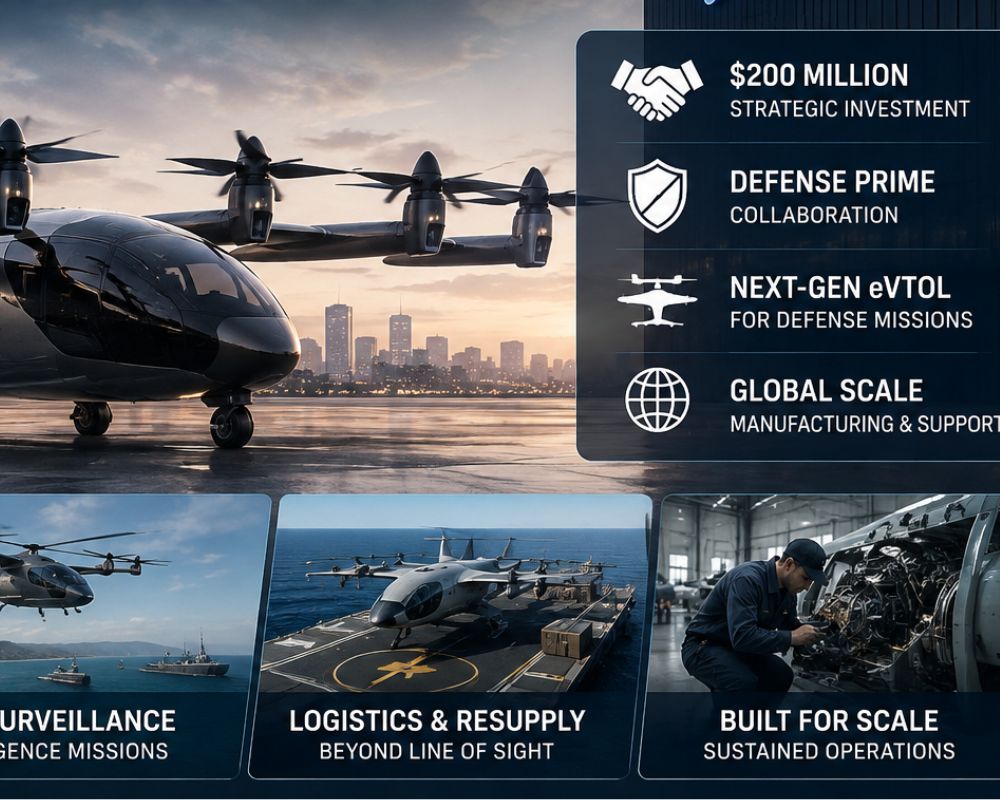
The recent Archer Aviation Boeing deal transforms the commercial flying-taxi startup into a defense contractor managing Insitu’s active military drone operations. To retain this revenue, Archer must immediately clear Defense Counterintelligence and Security Agency vetting protocols and convince the U.S. Navy that a Silicon Valley parent company provides reliable, long-term supply chain stability.
How does the Archer Aviation Boeing deal change the startup’s revenue?
The transaction shifts Archer from a pre-revenue electric vertical takeoff and landing (eVTOL) developer into a defense vendor managing over $200 million in annual military contracts. eVTOLs are aircraft that use electric power to hover, take off, and land vertically.
While Archer’s own aircraft and Boeing’s Wisk subsidiary remain pre-revenue, the transaction includes Insitu, an established prime contractor manufacturing unmanned aircraft systems for the military.
The transaction adds a defense businessgenerating over $200 million in annual revenueto Archer’s portfolio. Insitu holds ongoing defense contracts, including a$390.4 million award to supply Blackjack and ScanEagle dronesfor the U.S. Marine Corps, U.S. Navy, and allied nations.
Taking ownership of these active production lines immediately shifts Archer from a startup reliant on venture capital and automotive partnerships to an entity dependent on federal defence budgets.
The Tech Coverage Blindspot
Initial announcements framed this asset transfer as an aggregation of autonomous technology. Statements emphasised an “end-to-end physical AI platform” and urban air mobility.
Financial news coverage repeated this focus. Reports treated the deal as a way for Boeing to offload research costs while making Archer the leader in commercial flying taxis. The operational reality of acquiring an active military hardware manufacturer went largely unmentioned.
What regulatory clearance does Archer need to operate Insitu?
Archer must passfacility clearance reviews by the Defense Counterintelligence and Security Agency (DCSA)to legally manage Insitu’s classified-adjacent military contracts. The DCSA is the federal agency responsible for vetting personnel and corporate entities that require access to classified defense information.
Owning a defense prime requires distinct corporate infrastructure. Insitu holds classified-adjacent contracts, which trigger automatic audits when ownership changes.
These regulations require the parent company to prove its supply chain, board of directors, and foreign investor list meet strict security standards. A failure to pass DCSA vetting or clear Foreign Ownership, Control, or Influence hurdles can force a parent company to negotiate aProxy Agreementwith the federal government. This legal mitigation structure effectively vests voting rights in government-approved, cleared U.S. citizens, stripping the startup of direct operational control over the defence unit.
Archer representatives counter that the company is not entirely new to military partnerships. The startup currently works with the Department of Defence through the AFWERX programme and maintains a dedicated defence advisory board established to manage government integration.
Can commercial aviation startups merge with military hardware manufacturers?
Integrating a commercial software startup with a military manufacturer often forces the creation of parallel business units, as rapid prototyping cultures clash with rigid defence compliance mandates.
Merging commercial software and military hardware often causes productivity to collapse when distinct corporate identities clash. Commercial aviation startups prioritise rapid prototyping and early market entry. Military drone manufacturing operates under rigid compliance mandates where any unauthorised supply chain alteration violates federal law.
Integrating these two environments often forces companies to build parallel management structures or operate carved-out business units rather than unified engineering teams.
Will Insitu’s international military clients renew their contracts with Archer?
Allied nations will only renew their Insitu drone contracts if they determine Archer has the capital reserves and strategic intent to support decades-long maintenance cycles.
The immediate test for Archer’s management will be retaining Insitu’s existing customer base during the corporate transition. Insitu platforms currently operate in these deployments. They fall under the Foreign Military Sales (FMS) programme, a government-to-government system managed by the Defence Security Cooperation Agency that relies heavily on vendor stability and long-term sustainment. Procurement officers commit to decades-long maintenance and upgrade cycles. If allied defence ministries assess that Archer lacks the capital reserves or strategic interest to support tactical drones long-term, those contracts risk migrating to established defence conglomerates.
The outcome of these renewals will dictate whether this military drone acquisition subsidises Archer’s commercial ambitions or creates an unmanageable regulatory burden.
Frequently Asked Questions
What companies did Archer Aviation acquire from Boeing?
Archer Aviation acquired Boeing’s Wisk Aero, SkyGrid, and Insitu subsidiaries. Wisk develops autonomous electric aircraft, SkyGrid builds air traffic management software, and Insitu manufactures unmanned military drones.
How much revenue does Insitu generate?
Insitu generates over $200 million in annual revenue as a defense contractor. The company holds active contracts to supply tactical drones to the U.S. military and 35 allied nations.
Why does Archer need DCSA clearance? Archer requires Defense Counterintelligence and Security Agency clearance because it acquired Insitu, which holds classified-adjacent military contracts. The agency audits corporate ownership to ensure foreign investors and supply chains meet federal security standards.