






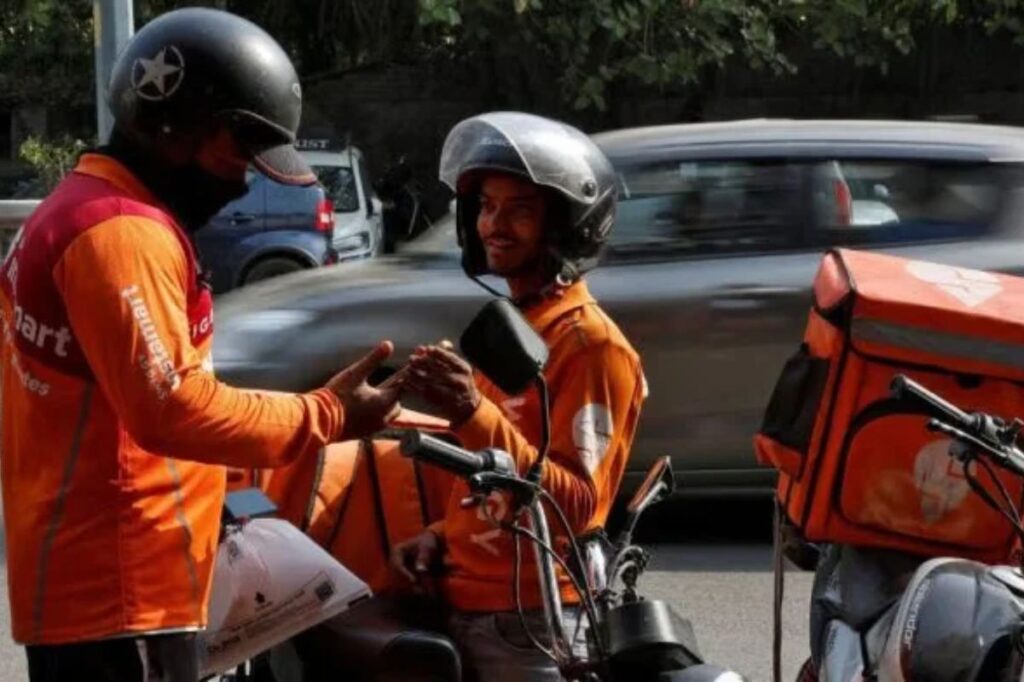
Swiggy Net Loss Widens Sequentially Due to Instamart Burn
Swiggy lost more money this quarter than last quarter, despite headlines praising a financial turnaround. While the company’s net loss narrowed compared to last year, Swiggy’s net loss actually expanded by 16.5% sequentially, jumping from ₹791 crore in Q1 to ₹922 crore in Q2, driven primarily by accelerating cash burn in grocery delivery.
Are Swiggy’s financial losses actually shrinking?
Swiggy’s losses are expanding quarter-over-quarter, deteriorating in real time over the last 90 days.
Mainstream coverage of Swiggy’s Q2 FY27 regulatory filings focuses on a 15.6% year-over-year reduction in net losses. Viewing the financials sequentially reveals a different operational trajectory. Between the end of June and the end of September, the company’s consolidated net loss increased by ₹131 crore, according to filings with the BSE.
This real-time financial trajectory challenges the dominant narrative that the platform is steadily marching toward overall profitability.
Why is Instamart cash burn accelerating?
The company’s quick-commerce division caused this wider deficit by heavily front-loading physical infrastructure investments.
Swiggy Instamart reported an adjusted EBITDA, a measure of core operating profitability excluding taxes and depreciation, loss of ₹651 crore in the first quarter of FY27. By the second quarter, that segment loss widened to ₹895 crore, according to the company’s Q2 earnings presentation.
Swiggy management attributes this investment to adding 69 dark stores, micro-warehouses used exclusively to fulfill online grocery orders, and network capacity. They argue these capital expenditures will yield future returns once the new locations reach maturity.
Why is year-over-year reporting misleading for quick commerce?
Measuring a hyper-growth startup against its position 12 months ago obscures the immediate costs of recent strategy shifts.
Reporting financial performance against the same quarter last year is a standard regulatory requirement. However, startup valuation analysts tracking the sector note that for a firm aggressively scaling physical infrastructure month-to-month, sequential quarter-on-quarter cash burn provides a much clearer picture of immediate operational stress.
Can food delivery profits cover the grocery deficit?
The grocery sector’s cash requirements currently outpace the food sector’s ability to fund them.
The core food delivery segment remains profitable, reporting an adjusted EBITDA of ₹341 crore on ₹10,054 crore in Gross Order Value (GOV) for Q2. Swiggy uses these restaurant delivery margins to subsidize the rapid expansion required to fight Blinkit and Zepto.
The accelerating Instamart deficit actively erodes these core profits.
Will Swiggy’s net loss continue to widen in Q3?
Competitor moves signal forced future spending that could push Swiggy’s sequential losses higher before new stores achieve operational efficiency.
While Swiggy management claimed on the earnings call that Instamart losses likely peaked in Q2, rival Blinkit just announced it is increasing its expansion target to 3,500 dark stores across India by March 2027.
Swiggy currently operates a network of only 1,240 dark stores. Matching this aggressive competitor expansion may require further escalated capital expenditure.
Frequently Asked Questions
Did Swiggy’s net loss increase in Q2 FY27?
Yes, Swiggy’s net loss increased sequentially by 16.5%. While year-over-year figures showed a narrowing loss, the company actually lost ₹791 crore in Q1 FY27, which expanded to ₹922 crore in Q2 FY27 due to quick-commerce investments.
Swiggy Instamart reported an adjusted EBITDA loss of ₹895 crore in Q2 FY27. This represents a significant acceleration in cash burn from its ₹651 crore loss in the previous quarter, driven by the rollout of 69 new dark stores.
Is Swiggy’s food delivery business profitable?
Yes, Swiggy’s core food delivery segment is profitable. It reported an adjusted EBITDA of ₹341 crore in Q2 FY27, though these profits are currently being used to subsidize the mounting losses in the Instamart grocery division.