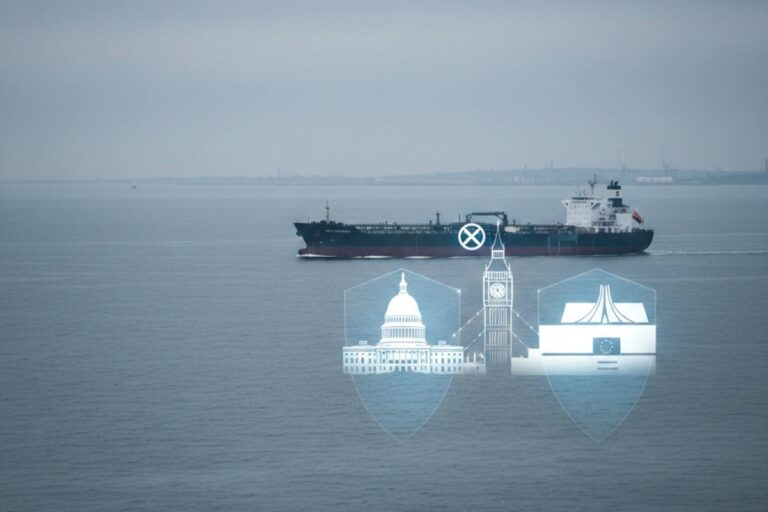







European customs officials recently enforced the definitive phase of the Carbon Border Adjustment Mechanism (CBAM). This regulatory shift directly impacts the UAE steel market by taxing carbon-intensive imports.
To remain competitive, Galadari Engineering has spent several years transforming its operational model. The company moved to a 60,000-square-meter facility in Dubai Industrial City (DIC) to prepare for this new economic reality. Notably, this AED 100 million investment aligns with the national “Make it in the Emirates” initiative.
The strategy at Galadari Engineering relies on a dual-track approach of physical scale and digital precision. By consolidating into a purpose-built industrial ecosystem, the firm can now absorb logistical and regulatory shocks.
This transition reflects a broader trend where industrial decarbonization has become a survival necessity. Firms must now balance rising raw material costs with tightening environmental standards to maintain global trade access.
The 2026 Reality: Navigating the Carbon Border
The arrival of 2026 signals a technological reckoning for the regional steel industry.
Historically, the UAE leveraged competitive energy costs to dominate global markets. However, new EU tariff structures threaten to erode these traditional advantages.
Exporters now face projected cost increases of up to 15% without rapid decarbonization. Consequently, the ability to track and report embedded emissions has become the primary metric for commercial success.
How is Galadari Engineering adapting to the UAE steel market shifts?
Galadari Engineering is adapting by relocating to a 60,000-square-meter automated facility, integrating BIM technology, and sourcing low-carbon green steel.
These strategic moves ensure compliance with the 2026 CBAM regulations while increasing production capacity to 4,000 tons per month to meet national infrastructure demands.
Galadari Engineering adapts to these shifts by focusing on the fabrication layer of the supply chain.
Unlike primary mills, fabricators must manage the “Scope 3” emissions of the materials they buy.
The firm now prioritizes sourcing metals produced through:
- direct-reduced iron (DRI)
- electric arc furnaces
This shift receives support from local giants like EMSTEEL, which captures significant carbon emissions through carbon-capture partnerships.
Scaling Operations: The 60,000-Square-Meter Transformation
The move to Dubai Industrial City marks a departure from fragmented, legacy workshop models.
This new facility provides Galadari Engineering with:
- production capacity of 4,000 tons of structural steel monthly
Such a scale is critical as the UAE accelerates “mega-projects” like:
- The Dubai 2040 Urban Master Plan
Furthermore, the expansion supports:
- The ongoing development of the Etihad Rail network
Strategic placement within DIC allows for seamless integration with:
- Jebel Ali Port
- major airports
This logistical advantage is essential for a firm that exports to over 30 countries.
In an era of shipping delays, moving heavy components to the port in minutes provides a significant edge.
As a result, the company can meet the aggressive schedules typical of the Dubai construction market.
Precision Through Automation: BIM and CNC Integration
Engineers have replaced traditional drafting tables with a sophisticated digital tech stack.
Galadari Engineering utilizes:
- Building Information Modeling (BIM)
- Tekla Structures
to create digital twins of every project.
This ensures every bolt hole is calculated before any steel is cut.
Consequently, this digital-first approach minimizes expensive errors on the job site.
The facility’s Computer Numerical Control (CNC) machinery brings this digital precision to life.
Automated systems include:
- cutting
- welding
These systems have drastically reduced:
- human error
- material waste
In a market with volatile prices, a 5% reduction in scrap metal secures project profitability.
Moreover, predictive maintenance algorithms now monitor these machines to prevent unexpected downtime.
The Economic Paradox of Green Steel
Adopting low-carbon technology creates a unique financial friction for the UAE steel market.
Green steel currently retails at a premium, creating tension between:
- environmental mandates
- fixed-price contracts
Developers often hesitate to absorb extra costs unless government mandates force their hand.
Notably, this creates a divide between:
- prestige projects
- price-sensitive commercial builds
Galadari Engineering bridges this gap by offering high-yield steel solutions.
By using stronger steel grades, engineers can design structures that require less total material.
This approach reduces the total carbon footprint without requiring the most expensive hydrogen-produced metals.
It offers a pragmatic middle ground for developers seeking sustainability within a budget.
Workforce Evolution: Reskilling for Automation
The shift toward high-tech facilities has changed the labor requirements for the industrial workforce.
As robotics takes over repetitive tasks, the demand for manual welding has decreased.
In contrast, the need for the following roles has reached record highs:
- robotic operators
- BIM technicians
This shift has created a temporary skills gap within the regional industrial sector.
The Ministry of Industry and Advanced Technology (MoIAT) addresses this through the Industrialists Career Exhibition.
For firms like Galadari Engineering, the challenge involves recruiting specialists who can manage complex software.
Retraining traditional laborers to oversee automated lines is vital for maintaining efficiency.
This investment in human capital serves as a safeguard against future labor shortages.
A Future Forged in Carbon-Neutrality
The trajectory of the UAE steel market is now linked to the global climate agenda.
As the 2026 CBAM phase continues, the industry will likely see further consolidation.
Smaller firms that cannot afford the leap into industrial decarbonization will find it harder to compete.
Success now requires:
- massive physical scale
- granular digital reporting
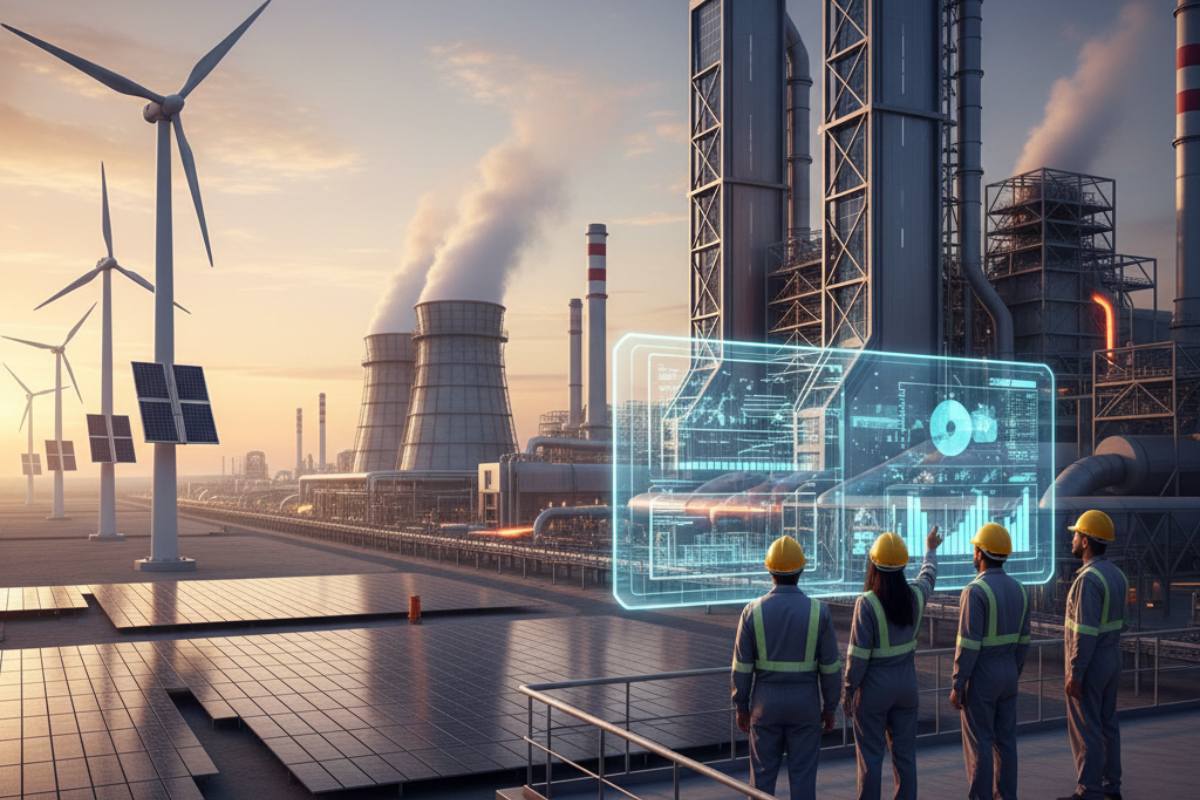
Future growth will involve industrial facilities transitioning entirely to renewable power.
With the UAE’s nuclear and solar infrastructure, the path to a net-zero steel sector is clear.
Industry watchers should monitor the upcoming “Make it in the Emirates” Forum in May 2026.
This event will likely reveal new subsidies for firms leading the green transition.
Frequently Asked Questions
What is CBAM 2026, and how does it affect steel?
CBAM is a European Union carbon tax on imports.
It requires steel fabricators to:
- report carbon emissions
- pay a premium for high-carbon materials
This forces the industry to adopt greener production methods.
Why is Galadari Engineering moving to automation?
Automation provides the following benefits:
- reduces material waste
- increases precision
This allows the company to maintain higher profit margins despite:
- higher costs associated with low-carbon “green steel.”
- regulatory compliance
How does “Green Steel” differ from traditional steel?
Green steel is produced using:
- renewable energy
- hydrogen instead of coal
It results in:
- significantly lower CO2 emissions
This makes it compliant with new global environmental trade standards.