






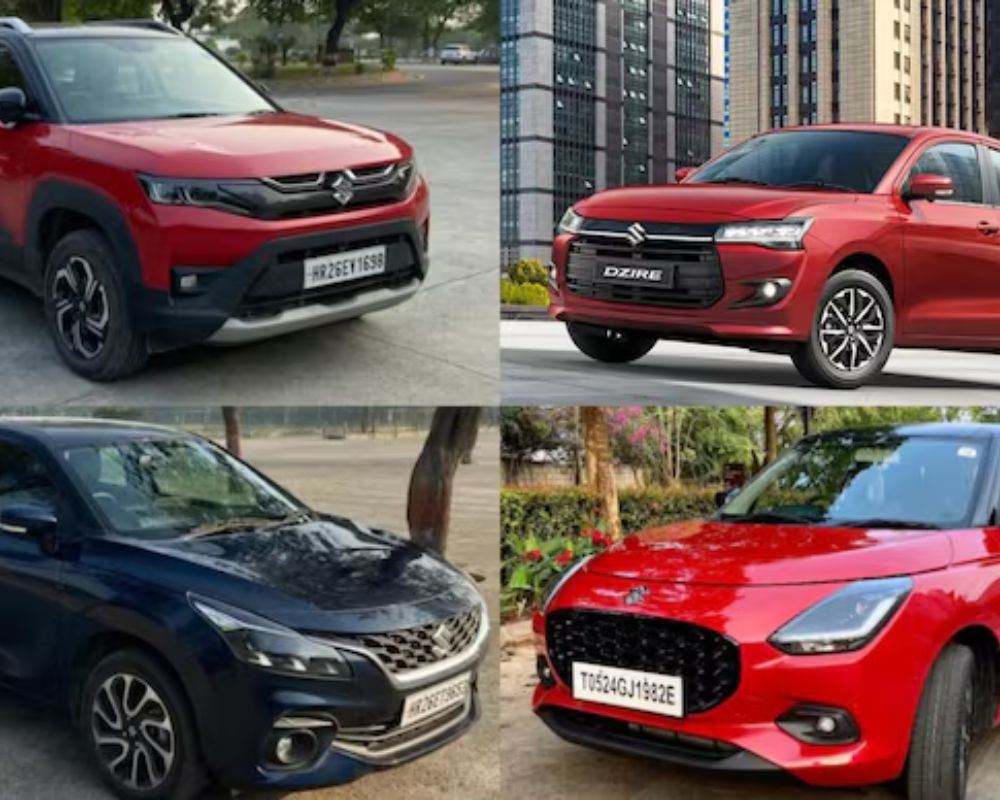
The recent 36.3% jump in Maruti small car sales for June 2026 is not an organic market revival. It is the direct mathematical result of an industry-lobbied Goods and Services Tax (GST) reduction enacted in September 2025. If the GST Council reverts this tax break, the entry-level segment will instantly contract, threatening Maruti Suzuki’s 6.3 million-unit 2031 projections.
Is the Entry-Level Hatchback Sales Boom a Real Consumer Trend?
No. Retail registration data shows the growth correlates entirely with a sudden, government-engineered price drop rather than organic consumer demand.
Mainstream coverage points to Maruti’s wholesale volumes, specifically the jump from 1,23,294 units in June 2025 to 1,68,026 units in June 2026, as proof that Indian consumers are returning to affordable hatchbacks. Retail registration data tells a different story.
When examining the overall baseline demand, the sub-₹8 lakh category has been in structural decline. According to market analysis on Team-BHP, this segment now represents a mere 1% of the total market value. The recent retail growth correlates entirely with the sudden price drop engineered by the government. In September 2025, the GST rate on small cars under 4,000mm was cut from 28% to 18%.
Without this 10% tax-driven discount, consumer preference was continuing to trend away from the entry-level hatchback segment toward premium models. The spike in registrations is highly elastic, reacting directly to the subsidized pricing rather than renewed product appeal.
How Did SIAM Lobbying Engineer the Tax Cut?
The September 2025 tax adjustment followed a coordinated campaign by Maruti Suzuki and the Society of Indian Automobile Manufacturers (SIAM), the apex national body representing vehicle manufacturers in India, to shift the blame for slumping entry-level sales from product obsolescence to government taxation.
Industry representatives argued that the 28% tax slab unfairly penalized lower-income buyers. Leading up to the policy shift, Maruti Chairman R.C. Bhargava publicly stated that small car demand was falling primarily because prices had gone beyond the spending capacity of consumers due to regulatory costs. SIAM echoed this exact sentiment, with President Shailesh Chandra asserting that potential buyers no longer found small cars affordable.
By framing the GST rate cut as a necessity for first-time buyers and middle-income families, automakers successfully repositioned a corporate volume problem as a consumer affordability crisis. This narrative pushed the government to intervene.
Why Are Maruti’s 2031 Passenger Vehicle Market Projections Vulnerable?
Following the rate adjustment, Maruti announced a $4 billion investment to reach an annual production capacity of 3.65 million vehicles by 2031. The automaker expects the domestic Indian passenger vehicle market to reach up to 6.3 million units in the same timeframe.
That projection relies heavily on maintaining high volumes in the entry-level category. Currently, according to company presentations, 69% of Maruti’s sales fall under the newly created 18% GST slab.
This creates a structural vulnerability. The GST Council regularly adjusts tax slabs to address state revenue shortfalls and shifting economic priorities. If the council faces a revenue deficit and reverts the rate back to 28%, the mathematical basis for Maruti’s capacity expansion target collapses, leaving the company with massive stranded factory capacity.
Why Did Competitors Abandon Entry-Level Cars?
Fighting for a segment defined by razor-thin margins introduces risks to corporate profitability that other automakers have chosen to avoid. Over the last four years, competing manufacturers deliberately reallocated capital away from the sub-₹10 lakh space to protect their bottom lines.
Mahindra & Mahindra transitioned to an 83% SUV mix, pushing its average selling price (ASP) to ₹15.51 lakh according to financial disclosures. Tata Motors and Kia have similarly moved upmarket. By contrast, Maruti’s reliance on lower ASP vehicles creates a massive annual value gap compared to its market share volume.
Competitors insulated their margins by operating in self-sustaining, premium segments. Maruti tied its largest capacity expansion in history to a subsidized tax rate the government can change overnight.
Frequently Asked Questions (FAQ)
Why did small car sales increase in India recently? Small car sales jumped because the GST Council reduced the tax rate on vehicles under 4,000mm from 28% to 18% in September 2025. This engineered a price drop of ₹50,000 to ₹65,000, triggering a volume spike that manufacturers claimed as an organic market revival.
How much of Maruti Suzuki’s sales depend on the new GST tax slab? Currently, 69% of Maruti Suzuki’s sales fall under the newly created 18% GST slab for entry-level vehicles. This high reliance makes their future 6.3 million-unit market projections highly vulnerable to future tax policy changes.
Are other Indian automakers investing heavily in small cars? No. Over the last four years, competitors like Mahindra & Mahindra, Tata Motors, and Kia deliberately reallocated capital away from the sub-₹10 lakh space. They chose to focus on higher-margin SUVs and premium segments to protect corporate profitability.