






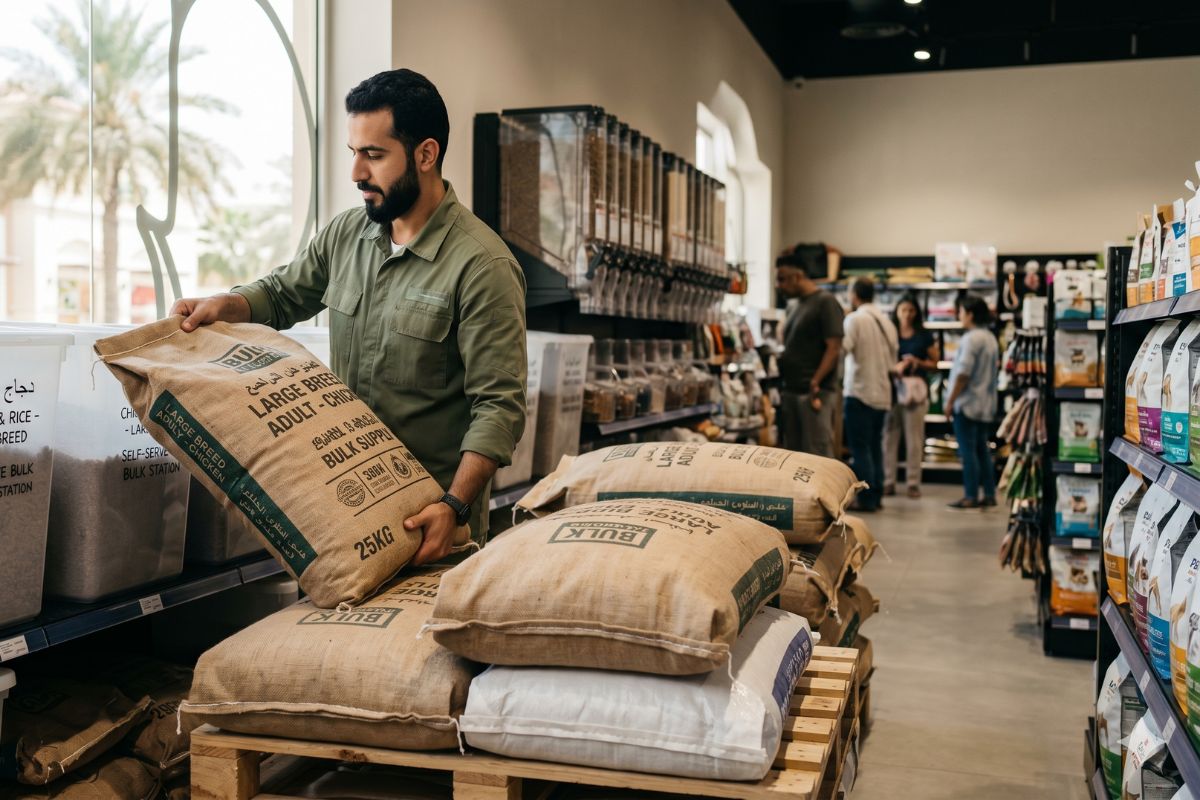
The days of direct international pet food imports are over. Premium animal diets are currently stranded at sea for additional weeks due to geopolitical disruptions, leaving UAE retailers’ shelves bare and loyal pet owners frustrated. And store managers can’t gamble their monthly revenue on unpredictable ocean freight schedules and skyrocketing container costs. Rather, the industry is witnessing an urgent, structural shift as retailers bypass the maritime chaos and partner directly with bulk pet food suppliers onshore UAE.
The UAE imports over 80 per cent of the commercial pet food products. In the past big retail chains did their own direct imports to keep margins as high as possible. Store owners negotiated directly with European manufacturers, booked their own sea freight and absorbed the port clearing process. But all that calculus goes out the window when maritime freight rates gyrate wildly and delivery schedules go awry.
Out-of-stock situations disenfranchise consumers immediately. Pet owners are incredibly loyal to the brands that feed their pets. That customer is driven straight to a competitor by a missing specialty kibble or prescribed fresh roll.
The Breaking Point of Just-in-time Dog-food Delivery
Why are UAE pet retailers shunning direct imports?
UAE pet retailers are looking to local bulk suppliers to bypass severe maritime shipping delays, reduce expensive warehouse costs and prevent premium pet food from expiring. Such a local policy guarantees dependable shelf stock without forcing shops to lock up critical operational capital in large safety inventories.
Global retail operations have refined the just-in-time inventory model over the last 20 years. Old stock was exhausted and store managers re-stocked. This lowered storage costs and kept capital liquid. But that system demands absolute predictability in international logistics. That predictability was effectively dismantled for Middle Eastern importers in the current geopolitical environment.
“Before, a container of normal shipping containers of high-end dog kibble would arrive at Jebel Ali Port in the reliable four-week transit time from Rotterdam. That same container now faces the vagaries of delay, the congestion of ports and the steep surcharges of insurance. The smaller pet retail chains don’t have the financial leverage to absorb these sudden freight spikes. At the same time, independent shop owners often see their orders bumped off fully booked vessels.
Consumers notice such logistical breakdowns immediately as shoppers demand absolute consistency in the availability of products. Veterinary clinics are even more stringent. Specialized renal or hypoallergenic diets are medical necessities, not optional consumer goods. When a direct import shipment is anchored for an additional week off the coast of East Africa, local clinics face angry clients and compromised animal care.
Why Safety Stock Strategies Bleed Retail Capital
In response to the initial maritime delays many procurement managers aggressively increased their safety stock. Retailers doubled standard order sizes to create an artificial buffer for future shipping disruptions. This reactionary strategy, while understandable, has dire secondary financial and operational ramifications.
Dubai and Abu Dhabi command premium prices for commercial real estate space. Every square meter of storage for extra bags of cat litter is an operational cost. Retailers are forced to convert valuable front of house sales floors into makeshift warehouses. So this strategy is actively degrading the customer shopping experience. Additionally, cash flow tied up in stagnant inventory is cash that business owners can’t use to invest in growing into new stores.
High-end pet retailers are at even greater risk of product expiration. The UAE demographic profile is one of a high concentration of professionals who are willing to spend premium rates for scientifically formulated diets. These premium formulas often include fresh proteins and no artificial preservatives. So they have very sensitive shelf lives.
Stockpiling six months’ worth of inventory virtually ensures that some portion of it will go out of date before the retailer can sell it. Spoilage immediately wipes out the profit margin the retailer hoped to protect by importing directly. Store managers trade the risk of stock-outs for the certainty of inventory depreciation.
The Strategic Shift To Bulk Pet Food Suppliers UAE
The reality of money requires a structural compromise between empty shelves and overflowing back rooms. Retailers find the compromise by shifting the importation risk off their own balance sheets. More and more business owners are turning to localized bulk pet food suppliers UAE to manage the volatile international supply chain.
A local B2B pet supplies distributor is a whole different animal than your average store. These entities have the capital reserves to lock in large, stable freight contracts. They absorb the maritime delays, port clearance friction and bulk storage requirements. The distributor keeps the stock onshore in the Emirates, allowing retailers to buy small, manageable quantities on a weekly basis.
This model of local sourcing returns retail efficiency without international risk. A shop manager in Sharjah can order on Tuesday and get the pallet by Thursday. The distributor is a giant shock absorber between the global shipping lanes and the local storefront.
How PetsClub UAE is Changing the Procurement Equation
PetsClub UAE is the newest example of this wholesale distribution model in Dubai. The company operates from a central logistics base in Dubai Investments Park (DIP-1) with active climate-controlled stock of major international pet brands. Their facility design specifically addresses the challenges of perishability of modern premium animal diets.
Maintaining the cold chain remains an operational imperative for fresh pet food. At the DIP-1 facility, they utilize sophisticated climate mapping to verify temperature uniformity across all pallet racks. When a specialty veterinary diet ships from the warehouse, it goes out in temperature-controlled vehicles to the retail destination. This continuous cold chain preserves the potency of the product and the integrity of the manufacturer’s brand.
The company organizes its operations to serve huge retail chains as well as independent veterinary clinics. The B2B platform allows procurement officers to track onshore inventory levels in real-time. This transparency allows store managers to accurately plan their weekly restocking schedules. When a certain brand of wet cat food is in high demand the retailer will ask for an immediate top-up delivery locally.
PetsClub UAE handles customs clearance, municipality product registrations and final-mile intra-Emirate delivery. The distributor bears the entire logistics burden on the store owner. This change in structure enables retail managers to concentrate their energies on floor sales instead of tracking delayed ocean freight.
How to Choose B2B Pet Supplies: Practical Steps
Changing a business procurement model is a careful audit and selection of strategic partners. Retailers need to take a hard look at their existing operational inefficiencies before signing on new vendor contracts. Follow these steps to align inventory management:
- Audit Historical Stockouts Calculate your real stockout % over the last ninety days. See exactly what product categories are missing from the shelves at the right time.
- Calculate the real landed costs: Add the latest freight surcharges, port storage fees and the cost of expired safety stock to your invoice base price. The initial sticker price you see has very little to do with what you’ll be paying when you buy it directly.
- Prioritize API Integration: Seek out distributors that have the ability to connect their warehouse management system directly to your Point of Sale (POS) software. This enables automated reorder triggers based on real-time consumer purchasing data.
- Climate Infrastructure Check: Screen potential wholesale partners for physical infrastructure. Make sure they have enough climate controlled warehousing to maintain the nutritional value of fresh food.
The UAE pet care industry continues to evolve at a fast pace. Its participants have to develop more elaborate operational frameworks to keep up with this growth. However, close partnerships with domestic logistics partners who own the inventory onshore are necessary to ensure product consistency. If retailers don’t align their supply chains to the macroeconomic realities, they will lose their customer base to more agile competitors.
Common Questions
What are the main reasons for pet food shortages in the UAE?
Geopolitical disruptions in the Red Sea are the cause of most recent shortages. Ocean freight carriers detouring around Africa add weeks to transit times, breaking the normal inventory models used by retailers in the UAE.
How do bulk pet food suppliers help the local retailers?
Bulk suppliers import goods in large quantities and store them in localized temperature-controlled warehouses. This allows retailers to buy smaller, more frequent batches directly from the UAE, removing the risk of international shipping.
Why not hold additional inventory in the back of retail stores?
Extra safety stock consumes operational cash flow and takes up costly commercial real estate. More critically, premium pet foods have limited shelf life, so bulk safety stock frequently expires before it can be sold.