






Historic reserves, political turmoil, and huge costs make it hard to see how the sector can be revived in the future.
Venezuela’s Plan to Revive Its Oil Industry Is a Risky Bet
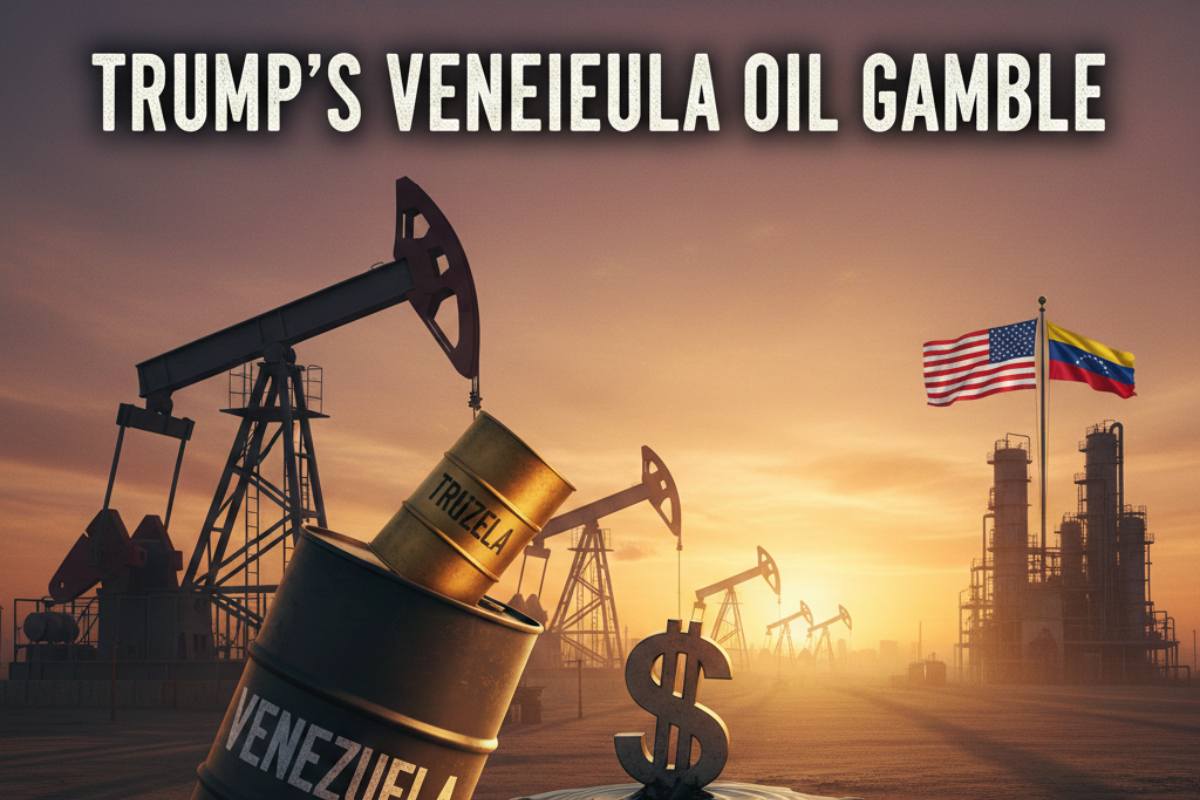
President Donald Trump’s bold statement that the United States will take over and improve Venezuela’s huge oil industry is more than just a policy speech; it’s a major event with big effects on politics and the economy around the world.
Experts say that the plan for the recent military operation in Caracas faces deep, structural problems that could last for years or even decades, despite all the talk and drama.
Trump’s plan is simple on the surface: take over Venezuela’s oil industry after capturing President Nicolás Maduro, let U.S. energy companies in to fix infrastructure that has been neglected for a long time, and in doing so, increase the world’s oil supply.
But analysts are quick to point out that nothing about that plan is easy.
The politics, the economics, and the logistics are all very complicated.
Venezuela’s Oil Industry: From the Best to the Worst
It helps to take a step back to see why this plan is so scary.
Venezuela has the world’s largest proven oil reserves, with about 303 billion barrels, or about 17% of all the oil that is known to exist.
That number impresses more than just textbook writers; it’s a big reason why the country has been at the center of global energy markets for decades.
But today, the business is a shadow of what it used to be.
It used to be able to pump millions of barrels per day, but now it only pumps about 1.1 million barrels per day, which is a small amount compared to what it used to be able to do.
Years of bad management, corruption, not enough investment, and harsh international sanctions have had a huge effect.
The result is damaged facilities, weak logistics, and a workforce that is worn out from the crisis.
That drop is important because, on paper, Venezuela’s oil should have a big impact on the world market.
But right now, on the ground, it doesn’t.
That means the path from possible to actual isn’t short.
Trump’s Ideas and How Much They Might Cost
Trump said at a press conference soon after Maduro was captured that American oil companies would “go in, spend billions of dollars” fixing Venezuela’s broken infrastructure and “start making money for the country.”
Those comments, while brave, raise a lot of big questions:
- Which companies will really put money into it?
- Who will pay for the repairs?
- How long will it take for production to go up, and will it go up at all?
Just to be clear, it’s not certain that big oil companies will go to Venezuela.
Many of these companies left the country years ago after their assets were nationalized.
Trump’s comments suggest they could be paid back for fixing up their buildings, but official responses have been careful or noncommittal.
Chevron is the only company that stands out.
It is the only U.S. oil company still doing business in Venezuela, and it does so through joint ventures with the state-run oil company.
Chevron has stressed following the law and regulatory frameworks instead of openly supporting any takeover plan, though.
Analysts say that bringing Venezuela’s oil industry back to life could cost tens of billions of dollars, maybe even more than $100 billion, and take ten years or more of steady investment.
Uncertain Political and Legal Situations
Companies would have to wait for the political situation to settle down before they could invest.
Trump’s statement that the U.S. will “run” Venezuela until a transition happens suggests that the U.S. will be involved in governing for a long time, which Venezuelan authorities have already pushed back against.
Legal experts also say that taking over another country’s natural resources could cause big problems under international law.
People might be able to challenge these kinds of actions in court or in international forums, which would make investment and ownership rights more complicated.
Disputed claims to leadership in Venezuela add to the uncertainty.
Venezuela’s vice president has disagreed with Trump’s claims of control, and the country’s institutions are still split on who really runs the country.
Oil Markets: No Quick Fix in Sight
Analysts say that even though production may rise in the future, it is unlikely to have an immediate effect on oil prices.
Right now, global markets have enough supply, and major oil-producing countries have decided to keep production steady, which means that prices are less likely to change quickly.
It would take years to turn crude oil in the ground into fuel that could be sold abroad, even if Venezuela’s wells were turned back on.
Some market experts say that if the US can stay stable for a long time, it could lead to more investment by American energy companies, which would be a good thing.
But that is still just a guess, since there is no political stability or legal clarity yet.
Why It Matters: More Than Just Barrels and Pumps
This situation that is developing isn’t just about oil.
It has to do with world politics, national sovereignty, the global energy market, and the limits of government intervention in the economy.
If the United States succeeds, it could gain access to huge energy resources and more power in a world where oil is still important for transportation and industry.
It could also alter the way power is distributed globally, especially if increased oil production from Venezuela affects the allocation of supplies.
However, failure, or even a prolonged period of uncertainty, could result in tens of billions of dollars in lost investments, harm diplomatic relations, and establish precedents that will significantly impact how countries perceive control over natural resources for a long time.
Looking Ahead: A Long and Uncertain Path
So what does Trump’s plan mean for Venezuela and the world oil market?
It makes sense on paper to take over a country with the most oil reserves in the world, fix its production capacity, and connect those resources to global markets.
But in real life, infrastructure decay, political fragmentation, complicated laws, and cautious investors all get in the way.
This is not a quick game.
It is a long, costly, and politically charged process with very high stakes.
The outcome of this will not only affect Venezuela’s future but also the larger discussion about power, resources, and influence in the global energy system.