






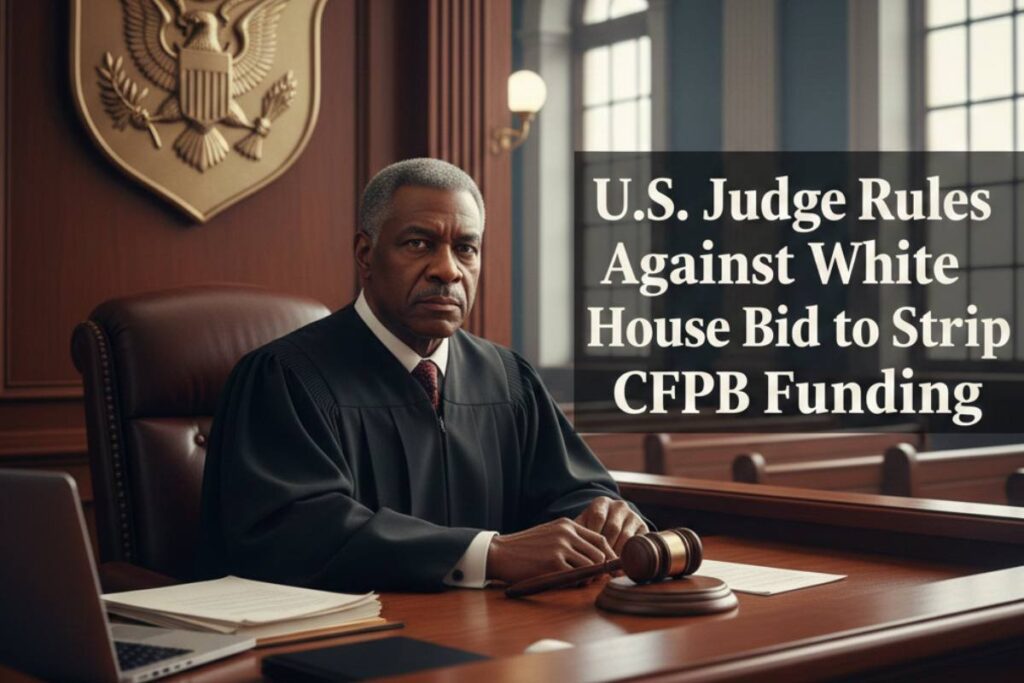
A federal judge stops the White House from cutting off funding for the CFPB, keeping the agency’s money and employees’ pay.
A Court Decision That Keeps the CFPB Alive, At Least For Now
A big federal court decision on Tuesday stopped the White House from trying to cut funding for the Consumer Financial Protection Bureau (CFPB) just days before its operating funds were about to run out. As a result, the CFPB will continue to get money and pay its employees.
It wasn’t a decision that was made every day. Not even close. And the effects, financial, legal, and political, go far beyond the courtrooms in Washington.
U.S. District Judge Amy Berman Jackson, who was appointed by President Obama and is known for her careful legal reasoning, said that the White House’s attempt to cut off the CFPB’s funding was not legal. She said that the bureau should keep getting money from the Federal Reserve, which is where it usually gets it. This means that employees will still get paid, and the agency won’t close down all of a sudden.
Why This Ruling Is Important: It Protects Customers and Jobs
After the 2008 financial crisis, the CFPB was set up to look out for everyday Americans, people who get mortgages, apply for credit cards, or fight predatory lenders. Over the years, it has given billions back to people who were hurt by bad financial practices.
The White House said that CFPB funding should stop because the Federal Reserve has been losing money and therefore doesn’t have any “combined earnings” to give out. This wasn’t just a budget argument. It was a direct attack on how the agency has paid for itself since it started.
Judge Berman flatly turned down this reasoning, saying that the White House’s argument was “unsupported” and a clear attempt to stop funding in a way that avoided earlier court orders.
What Started the Fight Over Funding?
Most federal agencies get their money through the normal congressional appropriations process, but the CFPB does not. The Dodd-Frank Act, which was passed in 2010 after the financial crisis, says that the bureau gets its money from the Federal Reserve‘s profits instead. That system worked without any problems for a long time.
However, things changed when the central bank started operating at a loss on paper. This was mostly because of its interest rate policies after the pandemic, which made it pay more on deposits than it earned on older bonds. The White House took advantage of this situation to say that the CFPB can’t legally ask for money from the Fed without “combined earnings.”
Yes, that’s a new argument. One that had never been tried in court before.
And that’s what the judge didn’t agree with.
A Wider Legal Context: Unions, Attorneys General, and Ongoing Lawsuits
This isn’t the first or even second time the CFPB has been in trouble with the law. Earlier this year, the National Treasury Employees Union won a lawsuit to stop mass layoffs at the bureau. They got a temporary injunction that kept many employees on the payroll while the case went on.
At the same time, 21 Democratic state attorneys general filed their own lawsuit against the White House for not giving CFPB funds, saying that the administration’s position is unconstitutional and would make it harder to protect consumers from financial wrongdoing.
The U.S. Court of Appeals for the D.C. Circuit is also involved in a legal battle. They recently agreed to hear the case again to see if the administration can go ahead with plans that could lead to firing most of the bureau’s employees. This case has been going on for months.
All of this has led to a lot of legal fights over the same issue: can the executive branch really break up an independent agency that Congress made?
What the Judge Really Said
Judge Berman didn’t hold back when she said that the administration’s explanation, that there are no earnings for the CFPB to draw from, was an attempt to “starve the CFPB of funding” and go against an earlier injunction.
In simple terms, you can’t get out of a court order by coming up with a new legal theory in the middle of a case.
Her choice doesn’t settle the bigger argument about how the CFPB should be funded or whether the government has the right to try to cut back on the bureau. But it does make sure that the agency will keep getting money while these bigger legal issues work their way through the courts.
In February 2026, there will be a trial to decide one part of the case: whether the CFPB employees’ union can sue acting CFPB Director Russell Vought over layoffs.
What Happens Next and Why It Matters
So, what’s next? For now, CFPB employees will keep working. The Federal Reserve keeps sending money to the bureau. There is still an agency that protects consumers from bad financial practices. That’s not a small thing. The CFPB has dealt with millions of consumer complaints and enforced rules against big banks in the past few years.
The fight is far from over in the long run, though.
The administration could appeal Judge Berman’s order, and it seems likely that they will, given other cases involving the CFPB. After all, the agency has been attacked in court from many different angles, including fights over funding, challenges to cuts in the workforce, and even questions about whether it is legal at all.
Critics of the CFPB say that the agency has become too powerful and that it makes businesses follow rules and regulations that they see as too strict. Supporters say it’s an important check on Wall Street and other financial companies that too often leave regular Americans to clean up the mess after they do something wrong. No matter what side you’re on, this conflict affects the country’s consumer financial landscape.
And that’s exactly why this week’s decision got a lot of attention right away from lawyers, consumer advocates, and business groups.
A Quick Summary of What You Need to Know
- The court stopped the administration from trying to stop CFPB funding.
A federal judge said that the Federal Reserve must keep giving money to the CFPB. - The decision makes sure that workers get paid.
Staff salaries are safe for now, at least as long as the funding route stays open. - The disagreement over the funding mechanism comes from the Fed’s unusual financial situation.
The White House said that the CFPB can’t get money from the Fed because it doesn’t have “combined earnings.” The court didn’t agree. - There are a lot of lawsuits going on right now.
This year, the CFPB has been in the middle of a lot of legal fights with unions, states, and appeals courts.
Last Thought: A Legal Story with Real-Life Effects
It may sound technical, with funding disputes, injunctions, and complicated financial terms, but the stakes are real. People who have trouble with debt, have to pay unfair bank fees, or are victims of predatory lending practices can turn to organizations like the CFPB for help.
The court has made sure that these protections stay in place in the real world while the legal battle goes on by keeping the bureau’s funding going for now. People will be watching how this story unfolds and how it will affect federal oversight in the future, not just in Washington
Interconnected Financial Oversight and Consumer Protection Briefings
To understand statutory regulatory mandates, financial fee structures, and institutional compliance frameworks, examine our investigative reports:
- The Hidden Math of UPI Transaction Charges: Who Actually Pays?, analyzing consumer financial protections, interchange fees, and regulatory oversight of payment ecosystems.
- The Compliance Tax on Small Businesses: How Automated Nudges Shift Administrative Costs to MSMEs, exploring administrative compliance burdens and automated agency oversight.
- US Stores Struggle with a Lack of Pennies, analyzing federal currency circulation costs, merchant rounding rules, and statutory legal tender requirements.
- UAE Sweeping Fintech Regulations: Exchange Houses Face Strict Capital Rules and Digital Compliance, reviewing financial supervision standards, anti-fraud compliance, and statutory capital thresholds.