






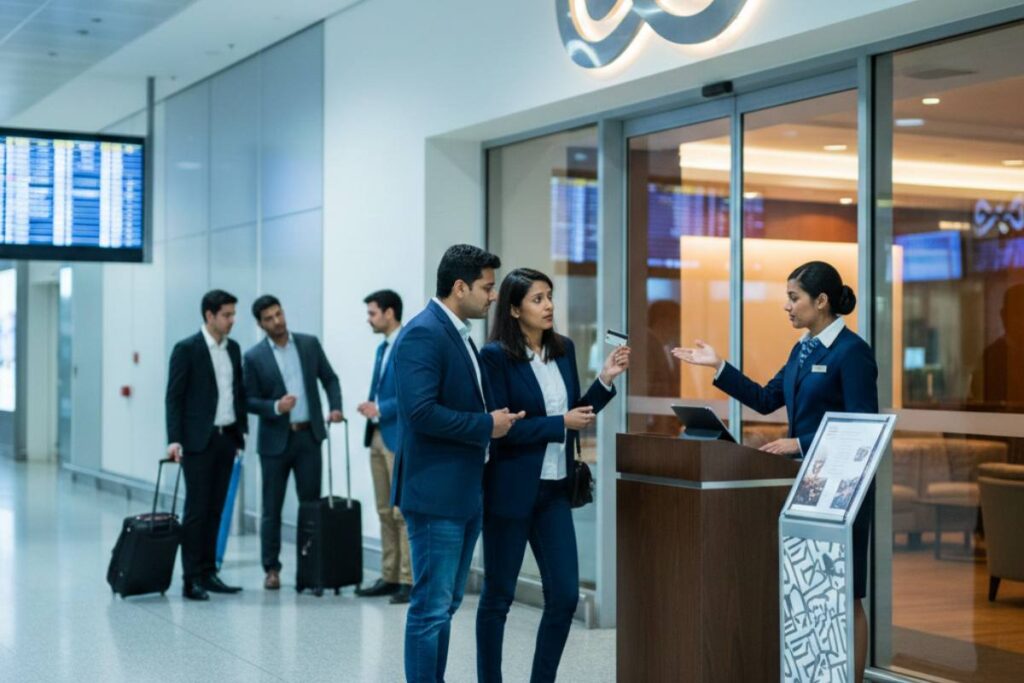
A big change for people who fly a lot, and a closer look at why it’s happening
Indian airport lounges used to be quiet places where anyone with the right credit card could relax, but they are getting harder to get into. Several big Indian banks, including private giants, large public-sector lenders, and even newer digital players, have started to change the rules for free access to lounges. The changes may seem sudden, but they are the result of more people coming to the lounge, higher costs, and a lounge ecosystem that is having trouble keeping up with India’s growing demand for air travel.
Let’s break down what’s going on.
Why Indian Banks Are Making It Harder to Get into Airport Lounges
For a long time, access to airport lounges was one of the best things about mid-range and premium credit cards in India. But over the past two years, the number of people using lounges has gone up by a lot. And that spike, which was caused by travel recovery, credit card use, and the “free-benefits” culture, has made banks rethink their business models.
People in the industry have been quietly raising the alarm: lounges are full, banks are getting more money back, and airport space is getting tight. A senior payments executive, who asked to remain anonymous because of company rules, said it simply: “The numbers don’t add up anymore.” Lounges were made for a small number of people who walk in today.
Banks have started to limit access almost at the same time, not to punish customers, but to bring things back into balance.
The Big Pattern Behind the New Rules
If you look closely, the changes that have happened recently fall into three main categories:
- Fewer Visits Each Month: Several banks now set monthly limits instead of yearly ones.
- Spending Requirements: You usually have to use your card a certain number of times to get in for free.
- Selective Eligibility: Only some “top-tier” cards now automatically give you access to lounges.
And this recalibration isn’t just a coincidence. Banks say that the costs of providing lounge access, which used to be profitable, have become too high.
How Lounge Costs Work Behind the Scenes
It might look like banks are “giving away” free access to lounges. But in reality, they pay middlemen like Priority Pass, DreamFolks, or the lounge operators directly for each visit. The fee is usually between ₹800 and ₹2,000 per visit, depending on where you are, what time it is, and what services you need.
Only a small number of cardholders used their lounge benefit actively until 2019. But two things changed:
- “Revenge travel” after COVID: More people traveled.
- “Buy now, pay later,” “fintech,” and “wallet-linked cards”: More cards became available, and many of them advertised lounge access as a selling point.
What happened? A huge rise in real visits, which meant that lounges were full and banks had to pay more and more.
The Banks in Charge of the New Lounge Access Reset
Let’s go through each bank one at a time, since the details are different even though the pattern is the same.
HDFC Bank Makes Lounge Rules Stricter
What’s New at HDFC Bank’s Lounge?
HDFC Bank, India’s biggest credit card company, made news when it changed the rules for some of its cards’ lounge access. The bank set up “minimum spend thresholds,” which means that customers can only get into the lounge after they spend a certain amount of money each quarter.
This “activation after spending” model is quickly becoming the norm in the business world.
Why HDFC Did It
Executives say that usage had become too high to keep up. Some lounges said that HDFC cardholders made up a large part of the people who came in every day.
An HDFC insider said it was “a benefit that was never meant to be used this much, at least not so often.”
ICICI Bank Changes Its Popular Lounge Program
ICICI’s Mid-Tier Cards Have More Restrictions
ICICI Bank also made it harder to get cards like Coral, platinum variants, and some co-branded cards. Monthly access limits were lowered, and some cards now only let you visit domestic terminals.
Why ICICI Changed the Policy
According to a senior card executive, usage of ICICI cards doubled in less than two years, which was “unexpected.” Costs went up in the same way.
Sources say the bank pushed back with operators, but the volume growth made it hard to negotiate.
Axis Bank Follows Up With Its Own Lounge Strategy Reset
Axis Bank, which is known for its strong co-branded cards like Vistara and Air India, also changed the benefits of its lounges. There are some new rules, such as:
- Monthly limits that are stricter
- Spend thresholds that are higher for activation
- More differences between free and paid visits to the lounge
Axis Knows About the Lounge Crunch
Axis Bank has said that this is a “market reality” and not a way to save money. A spokesperson said that lounges in India, especially in Mumbai and Delhi, are seeing “international-level traffic on a domestic scale.”
SBI Card Starts a Model Based on Spending
SBI Card, the credit card division of State Bank of India, also changed how people can get into its lounges. The biggest change is that activation is now linked to spending, which is very similar to HDFC’s model.
This means that customers have to spend a certain amount during a statement cycle in order to get free visits the next month.
Why SBI Card Changed Its Rules
SBI Card is India’s second-largest card issuer, so it handles a lot of business. Executives kept saying that overcrowding and rising reimbursement costs were the main reasons.
Kotak, IndusInd, and Other Banks Join the Overhaul
This isn’t just for the top four banks.
Kotak Mahindra Bank
Kotak has limited lounge access on its entry-level cards and now only offers it on its premium and super-premium cards.
IndusInd Bank
IndusInd has cut back on the benefit of unlimited lounge access on some cards, which it has been known for for a long time. Some cards now only let you use them in your own country, and many of them require you to spend money every month to unlock the perk.
Newer Digital Banks and Fintech Companies
Neo-bank and fintech cards used to offer lounge access to attract first-time users aggressively. But a lot of them have now cut back on or gotten rid of the feature.
Why Are Lounges So Full? A Closer Look
In the last five years, air travel in India has changed a lot. Let’s take it apart.
1. Air travel within the United States has skyrocketed
India is now the third biggest domestic aviation market in the world. Flying is easier than ever thanks to millions of new travelers, higher incomes, and lower airfares.
2. Credit cards are now common
India now has more than 100 million credit cards in use, which is a record high.
A lot of these cards let you into a lounge in some way.
3. Lounges Haven’t Grown at the Same Rate
Most Indian airports have:
- Not a lot of physical space
- Only one or two common lounges
- No plans to make big changes right away because of infrastructure problems
It was impossible to avoid the mismatch between “skyrocketing demand” and “limited supply.”
What Customers Think About the Changes to the Lounge Policy
Travelers, especially those who eat and work in lounges, have different opinions.
Some People Who Travel a Lot Get It
A business traveler from Bengaluru said, “To be honest, the lounges were becoming unusable. It was hard even to find a chair. Maybe the quality will get better if access is limited.”
Others Are Annoyed
Another flyer, who has a mid-tier ICICI card, said, “They say that access to the lounge is a big perk, but the fine print keeps changing. It doesn’t seem fair.”
How Banks Are Telling People About the New Rules
Banks have been making these changes quietly, usually through:
- Text message alerts
- Email alerts
- Updated benefit charts
- App alerts
- Revised card brochures
Most customers got these updates only days, and sometimes hours, before the new rules went into effect. This has made things more confusing.
What Experts in the Field Say About the Overhaul
Aviation experts say there are bigger problems with the system.
1. Huge Increase in Traffic
In the next ten years, India is expected to double the number of passengers traveling within the country. Lounges are already running at more than their best capacity.
2. There is an imbalance between supply and demand.
To make lounges bigger, you need:
- Approvals from the airport operator
- Time to build
- A lot of money
Airports just can’t make lounges big enough, fast enough.
3. Banks were giving away too much for too little.
Some mid-range cards that cost between ₹500 and ₹1,000 a year let you visit the lounge for free multiple times.
That model was never going to last for long.
What This Means for India’s Airport Lounge System
Changes to the policy could lead to bigger improvements:
1. Less Crowding
If fewer people who travel for work at low frequencies use lounges, business travelers may finally be able to sit down again.
2. More Premiumization
Airports might make:
- Lounges with different levels
- Lounges that only let people in digitally
- Pay-per-use premium areas
3. Better Quality of Experience
When there is less traffic, service is better, staff respond faster, and food is more likely to be available.
Will Access to the Lounge Become a Premium Benefit Again?
Many experts think the industry is going back to a more sustainable model: lounges that are mostly for frequent flyers and premium cardholders.
One consultant put it well: “It was a bubble. Everyone was in the lounge. That’s not how loyalty programs work. They should be unique.”
How Travelers Can Get Used to the New Rules
Travelers can still get the most out of their lounge access, even with stricter rules.
- Meet the minimum spending requirements as soon as possible
- Pick a premium card if you need access to the lounge.
- Think about paying for access to the lounge
- Keep track of changes ahead of time
How This Trend Stacks Up Around the World
India isn’t the only one. Several markets, such as the U.S. and the U.K., have also made it harder to get into lounges:
- American Express Centurion lounges now limit the number of guests
- In Europe, it’s common for Priority Pass users to have limits
- Many airlines only let premium cabin passengers in
As travel around the world picks up again, lounges everywhere are getting crowded.
Is This the Start of a Long-Term Change?
Yes, most likely.
- Banks will keep pushing models that are linked to spending.
- Lounges may put premium customers first.
- Airports might build more than one lounge to spread out foot traffic.
Over time, fewer mid-range cards may offer free access to lounges.
The Bottom Line
The changes to India’s lounge access aren’t meant to cut benefits; they’re meant to fix an imbalance that got worse over time and then suddenly got worse. The perfect storm was caused by more people traveling, more people using credit cards, and not enough space in lounges. Banks finally did something after being stuck between what customers wanted and rising costs.
And while travelers may complain, which is understandable, the changes may end up making lounges what they were meant to be: quiet, useful places for people who really need them.
Things are changing in the system. People who travel will get used to it. And maybe soon enough, the lounges will feel like lounges again, not crowded waiting rooms with better snacks.
Interconnected Retail Banking and Consumer Finance Briefings
To evaluate credit card unit economics, interchange margins, airport infrastructure, and banking profitability models, examine our specialized briefings:
- The Hidden Math of UPI Transaction Charges: Who Actually Pays?, analyzing payment network interchange fees, merchant discounting, and retail banking margin structures.
- Why Lifting Airport Ownership Rules Won’t Lower Indian Airfares, examining airport concession fees, commercial passenger terminal economics, and aviation operational overhead.
- New ATM Rules for Indian Expats in the UAE: Cross-Border Banking Limits & Surcharge Audits, detailing international card transaction caps and retail financial compliance.
- AU SFB Universal Bank Conversion: RBI Guidelines, Capital Adequacy, and Priority Lending Compliance, auditing retail deposit acquisition costs, fee income diversification, and branch economics.